Welcome

My name is Lisa and I'm a crafty girl with wanderlust working as an engineer by day. My blog chronicles projects in my home as well as pictures and stories from my travels.

Search

Instagram

Archives
Shop

Blog Index
The journal that this archive was targeting has been deleted. Please update your configuration.
Navigation

Entries in Gifts (31)

Thursday
Jan032013

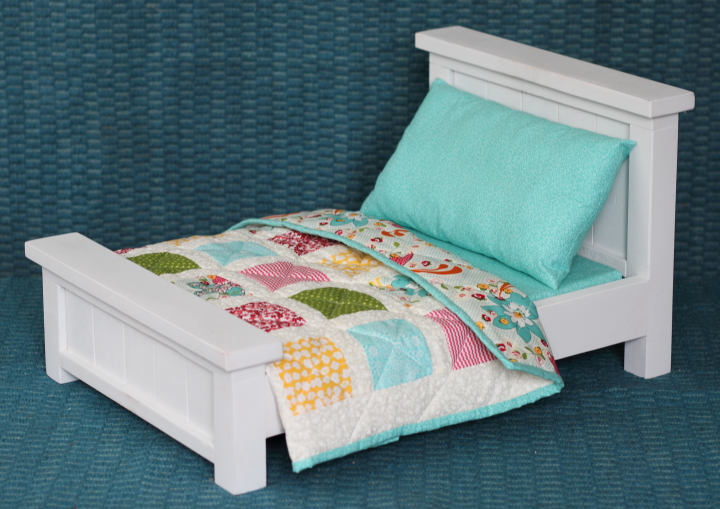
Doll Bed with Bedding & Patchwork Quilt

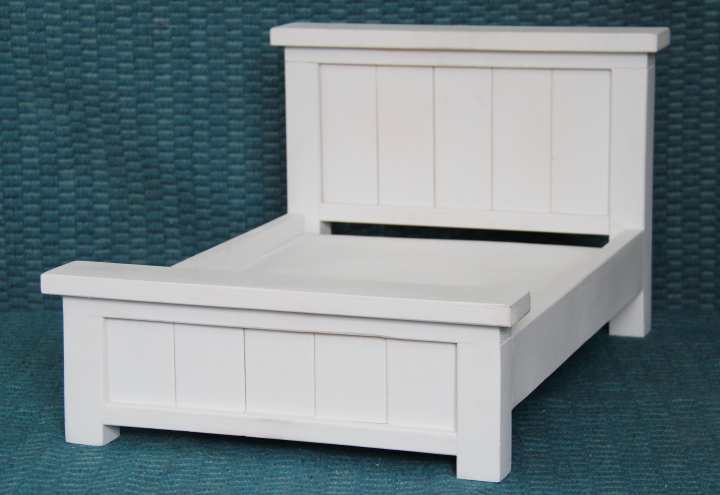
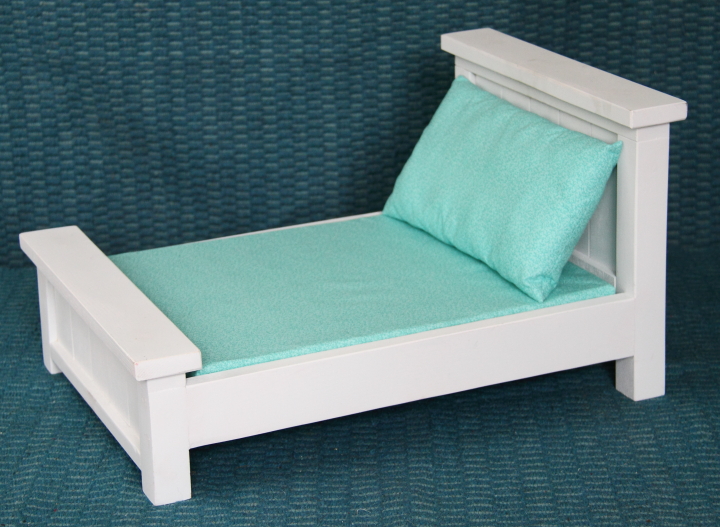
For Frank's youngest niece, who is seven years old, I decided to make a doll bed with bedding and a patchwork quilt to go with her American Girl doll for Christmas this year. 

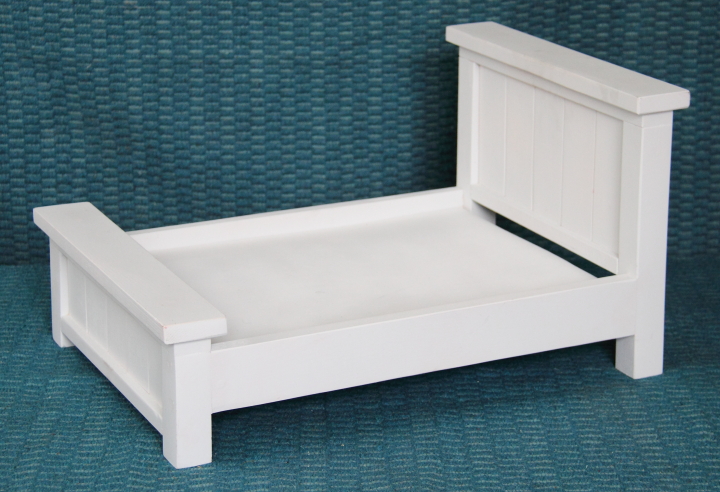
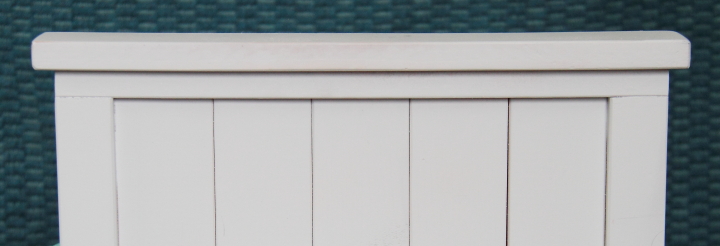
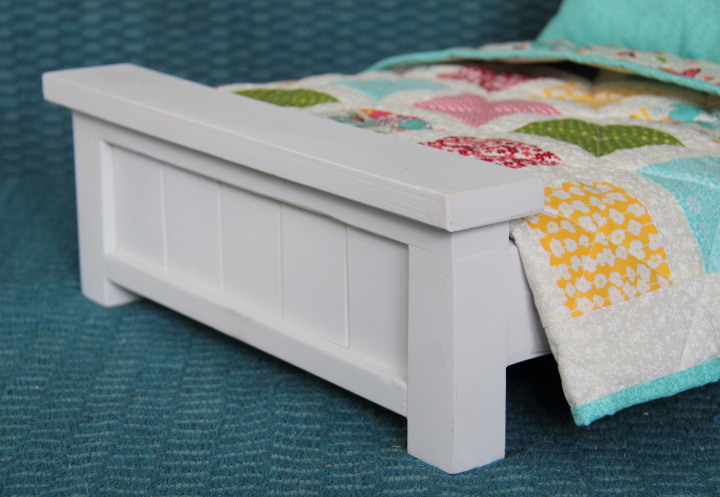
To make the bed I used the plans from Ana White's amazing website to build the Farmhouse Doll Bed. Her instructions are super clear and it was easy to build. I finished it with spray paint primer and a few coats of white spray paint.

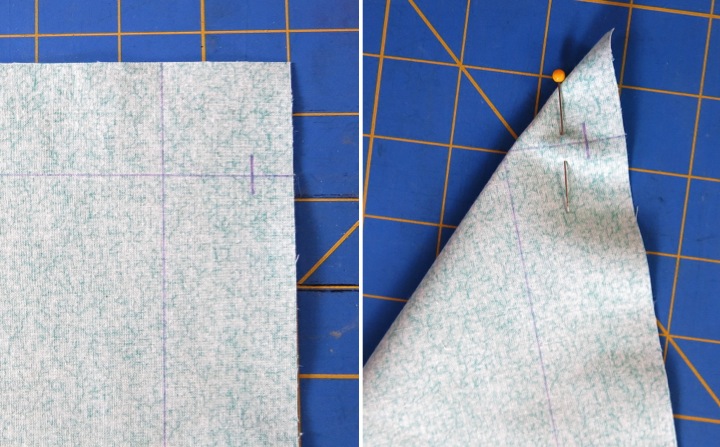
Next I needed to make a mattress and pillow for the bed. I bought some 1" foam and cut it to size to fit the bed frame, 14" x 19". To cover the mattress I cut a rectangle of fabric 17" x 22" to wrap around the sides and have a 1/2" seam allowance. I used a disappearing fabric marker to mark 1-1/2" from the edge of the fabric and then marked up 1/2" from the corner to know where I should stop sewing. I folded over the edges with right sides together and pinned it. 

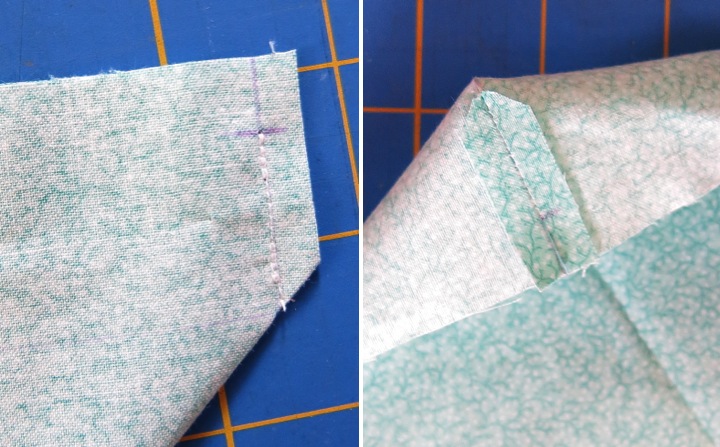
I sewed along the line, stopping at the 1/2" mark line, clipped the excess fabric and then pressed the seam open. After doing this for all four corners I had created the top of a box for the mattress.

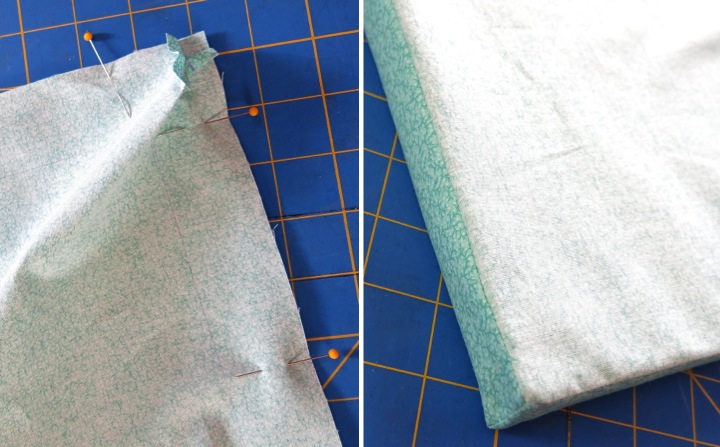
I then cut a piece of fabric 18" x 20" for the bottom and then pinned it to the top of my box, right sides together, lining up the edges. I sewed around the perimeter using a 1/2" seam and left an opening of a few inches. After turning it right side out I stuffed the foam mattress into the mattress cover and used a blind stitch to sew the remaining opening closed.

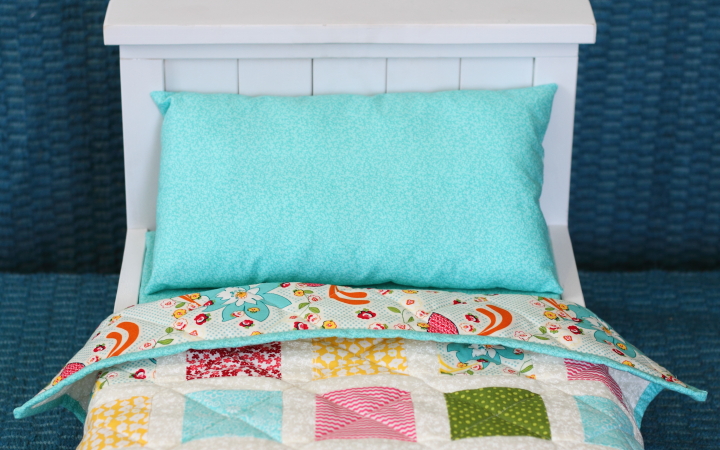
I made a simple rectangle pillow (two rectangles sewn together and stuffed) to complete the mattress and pillow for my bedding.

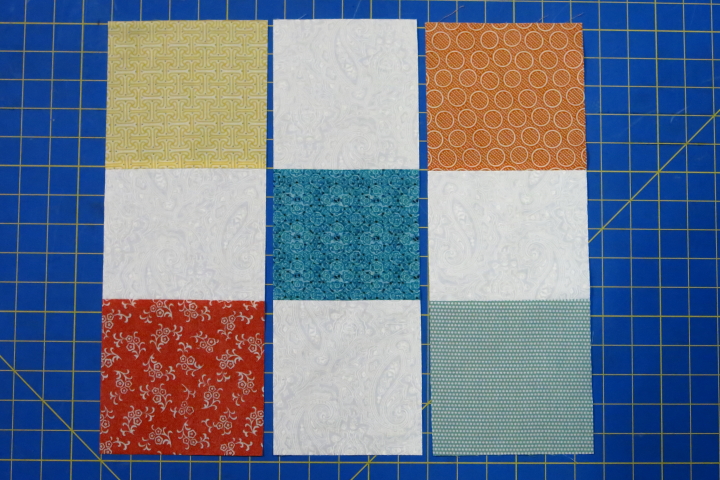
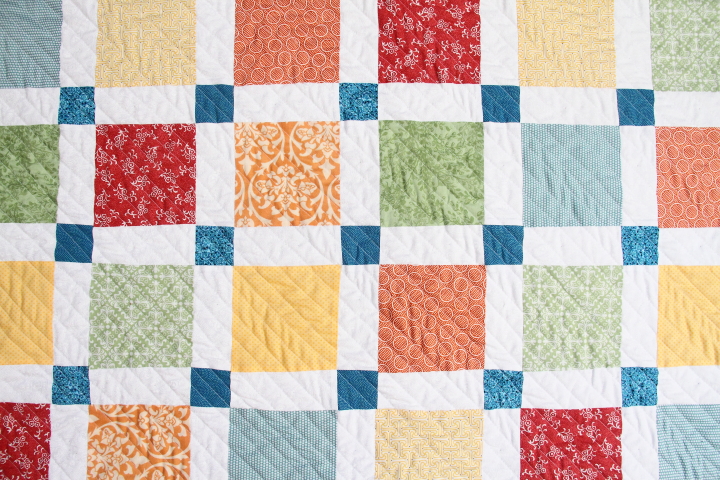
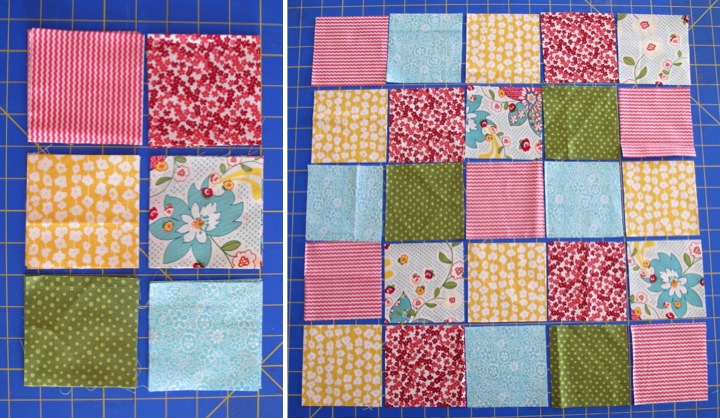
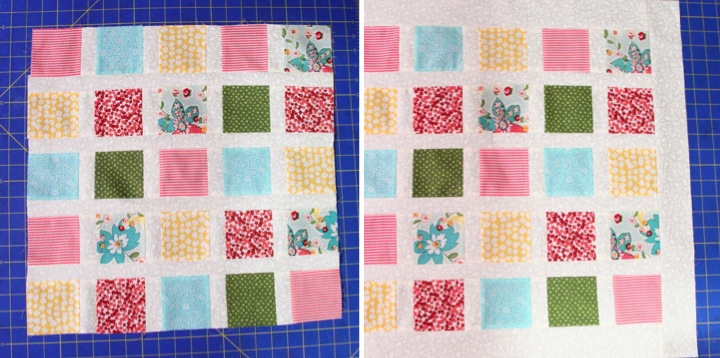
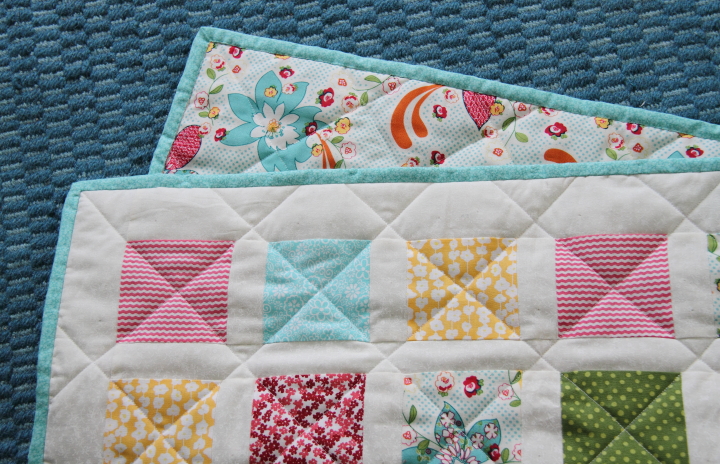
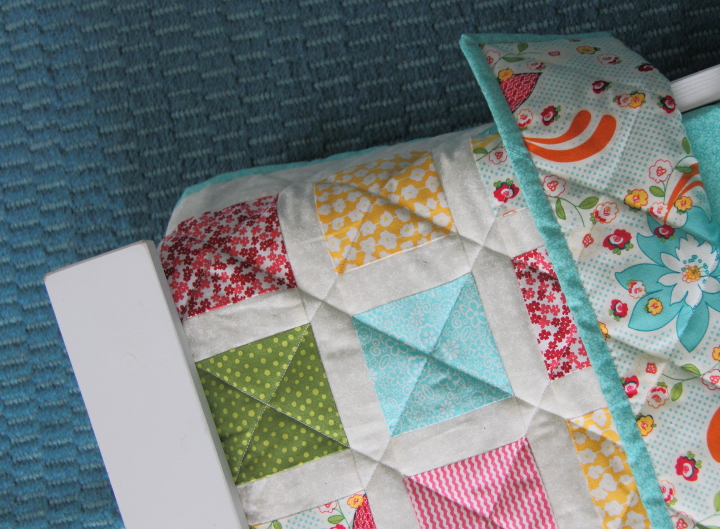
Next I made a small quilt for the bed. I chose a few fabrics I liked and cut several 3-1/2" squares from them. I laid out a 5 x 5 grid of the squares in a pattern that I liked.

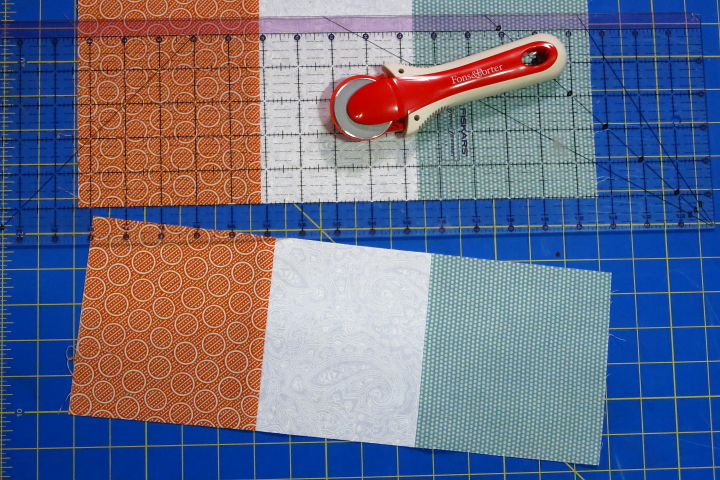
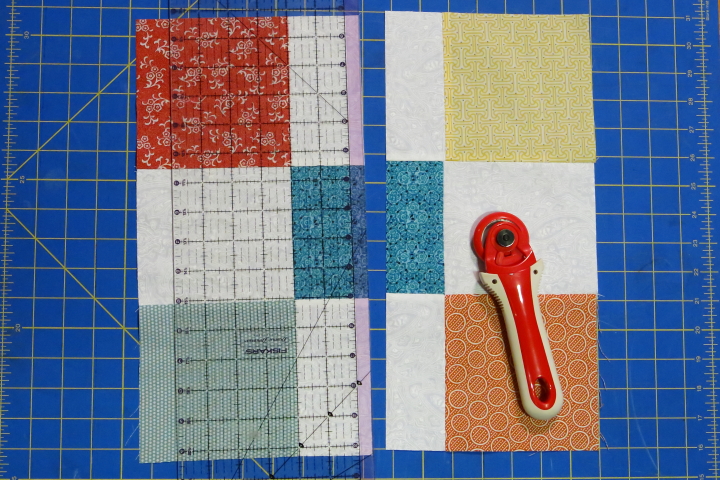
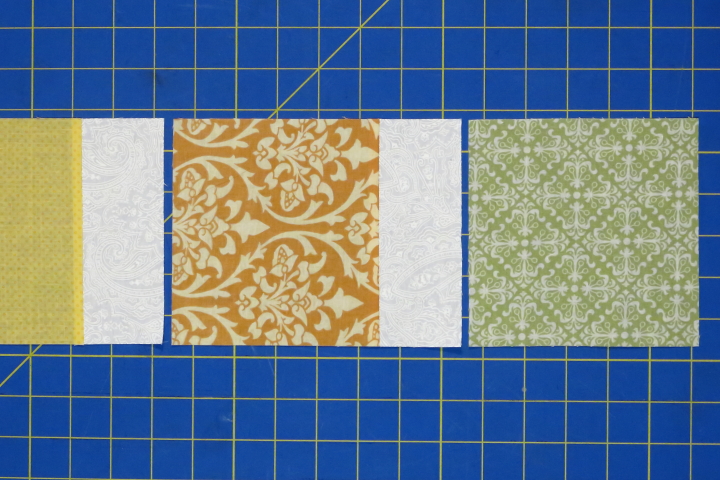
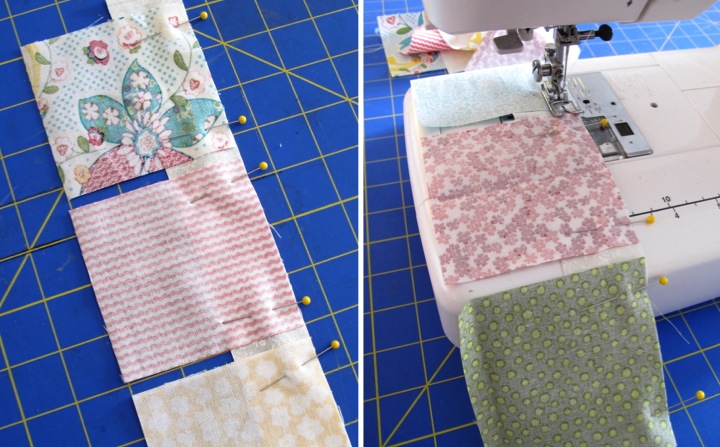
I decided to add white sashing between the squares. I cut several strips white fabric 1-1/2" wide and then pinned all of the squares, except the right most row to the white strips. I then used a 1/4" seam allowance to sew the squares to the white strips. Next I ironed the seams flat toward the squares and separated the squares by cutting the white fabric between them. 

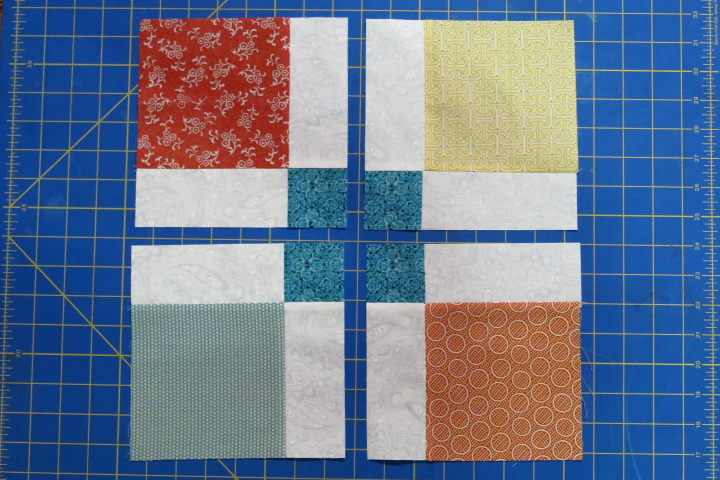
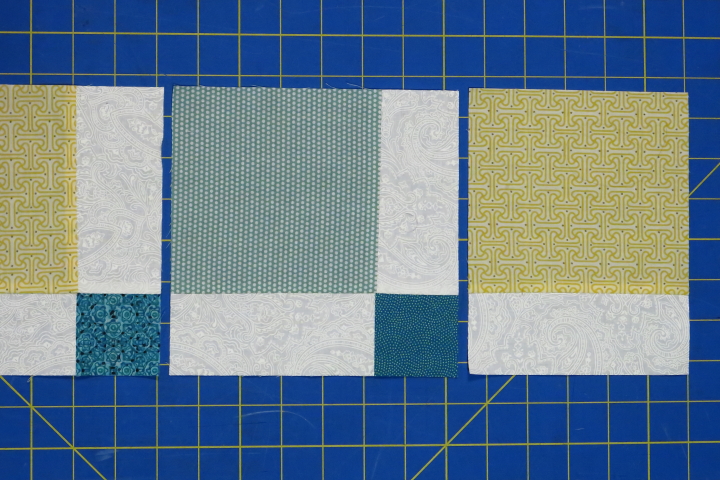
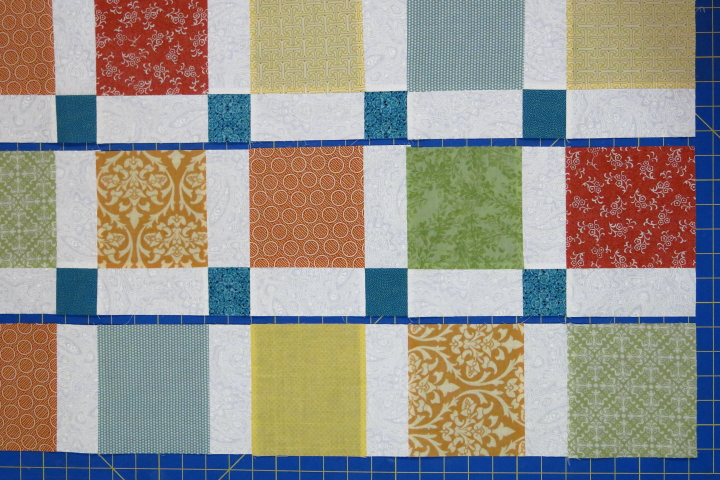
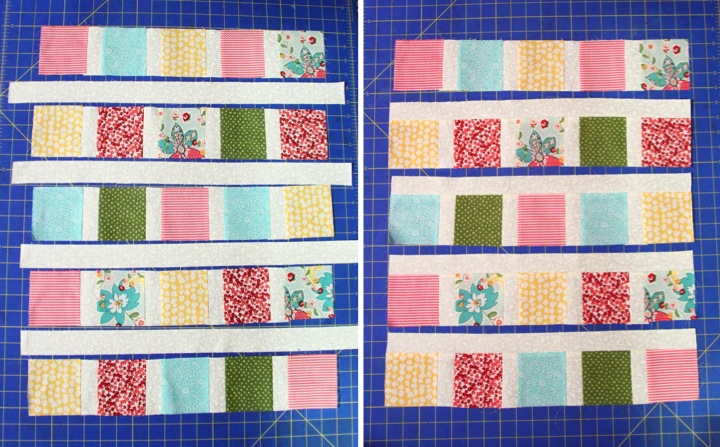
I sewed each row of the squares together with a 1/4" seam and then pressed the seam allowance flat towards the square. I then sewed a 1-1/2" strip of white to the top of each of the rows except for the top row.

I then joined the rows with a 1/4" seam and then I used white strips 2-1/2" wide to create a border around the quilt.

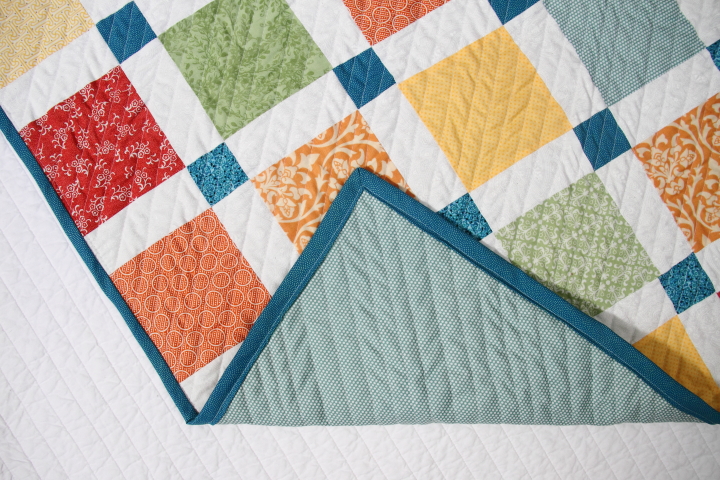
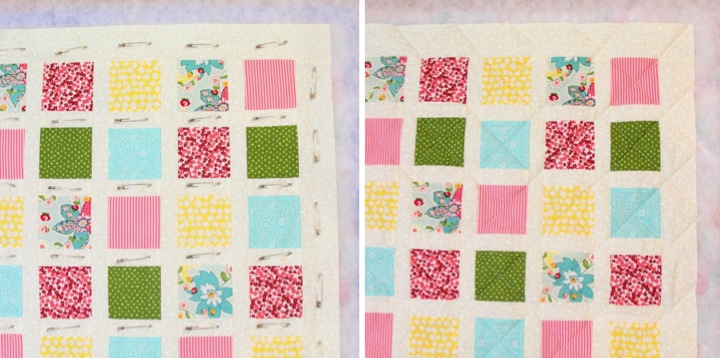
To prep the quilt for quilting I laid my backing fabric face down on the floor and taped it down. I layered my batting on top and then my quilt top face up. I smoothed everything out and then pinned through all of the layers. For my quilting I just sewed on the diagonal through the center of the squares.

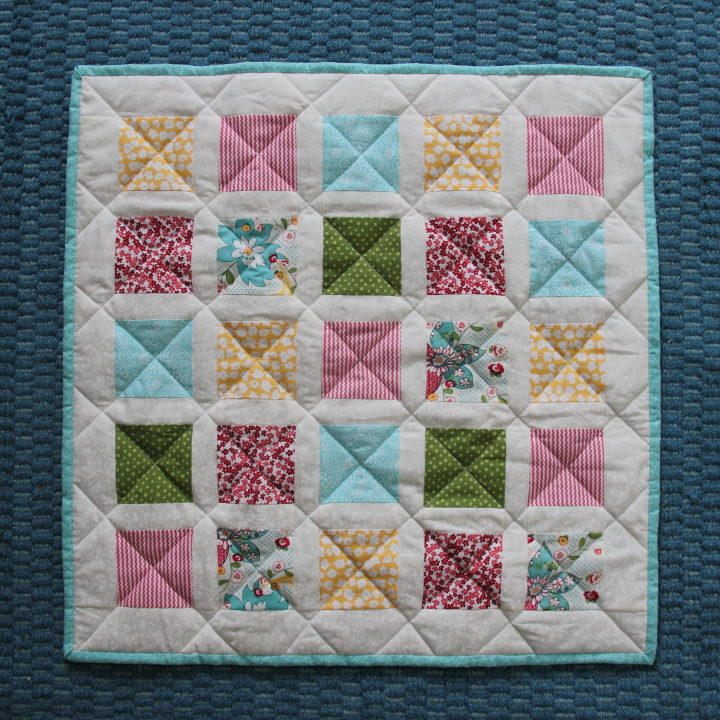
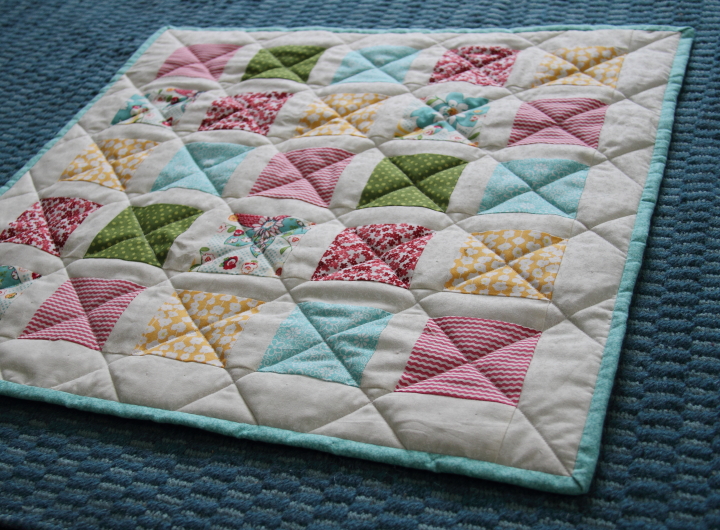
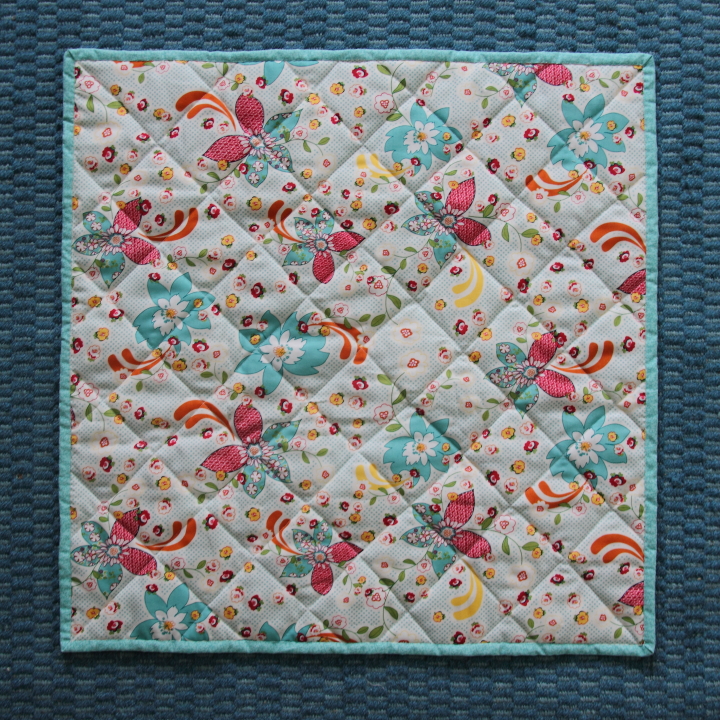
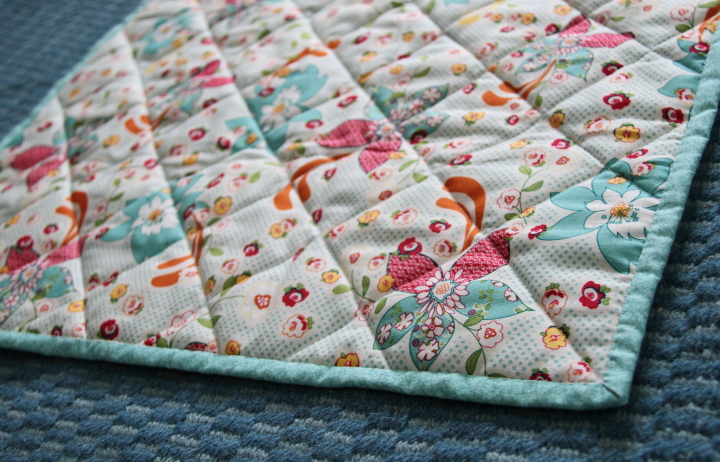
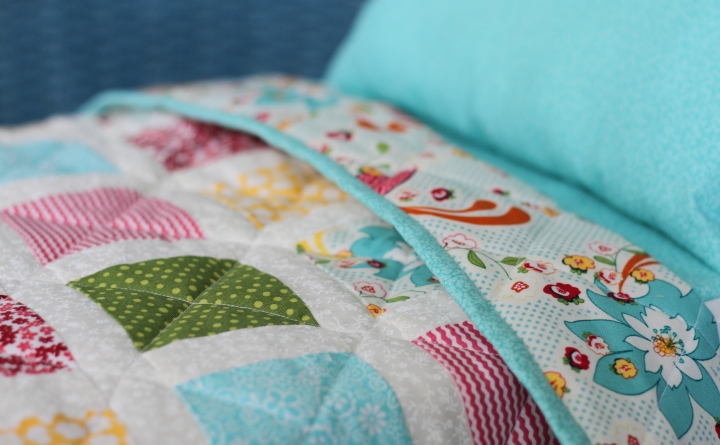
To finish the quilt I trimmed the excess backing and batting and added teal binding around the edge of the quilt. For basics on how to add binding check out my lavender sachet post.

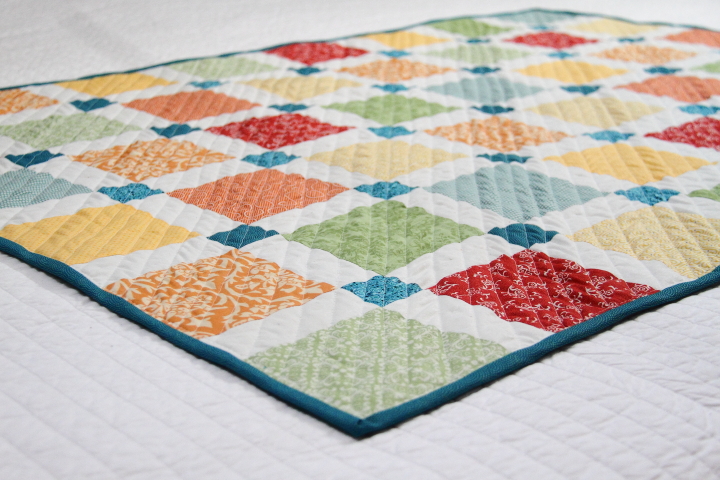
I think the doll quilt turned out really cute and I love how bright and colorful it is.

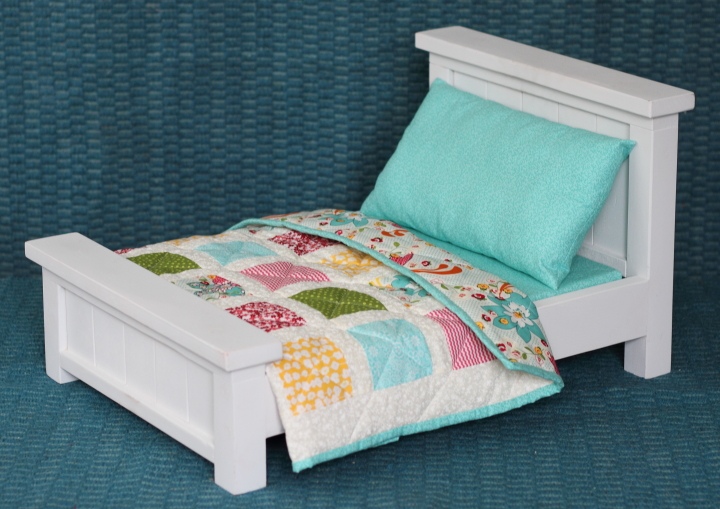
With the quilt complete I was excited to make the bed and see the final product all together. I think it all turned out great. 


I was so excited for Frank's niece to open the doll bed on Christmas and she really loved it. I had intended it for her American Girl doll, but she is an avid collector of stuffed ducks and within a few minutes of opening her presents she had two of her ducks tucked into the bed. It was so cute and it made me so happy to see her enjoying it.

Friday
Dec282012

Lavender Sachet

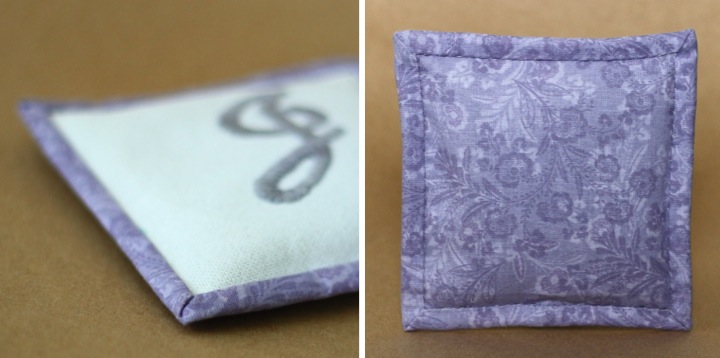
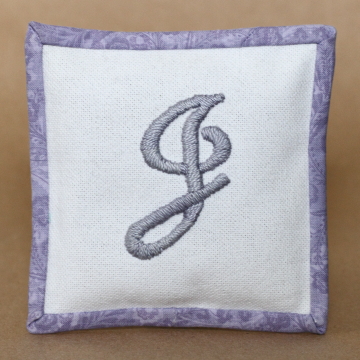
For Christmas this year I made Frank's mom a lavender sachet with her first initial embroidered on the front. I had some lavender that I dried from my garden so I thought that this was a perfect way to use it.

To make this sachet I used dried lavender, white embroidery linen, a fat quarter of cotton for the binding and backing, pearl cotton embroidery thread, white thread, a 4" embroidery hoop, an embroidery needle, a disappearing ink fabric marker, scissors, pins and my sewing machine. If you don't have a sewing machine you could make this completely by hand, it would just take a bit longer.

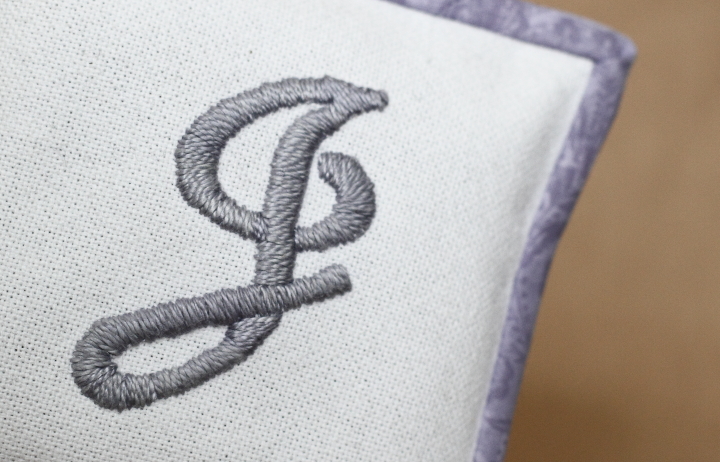
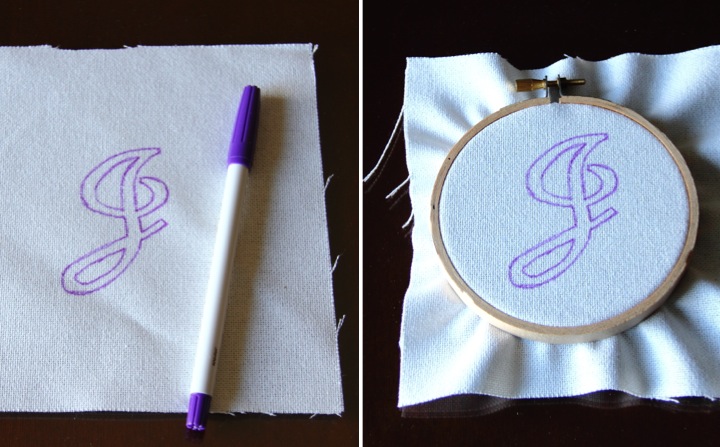
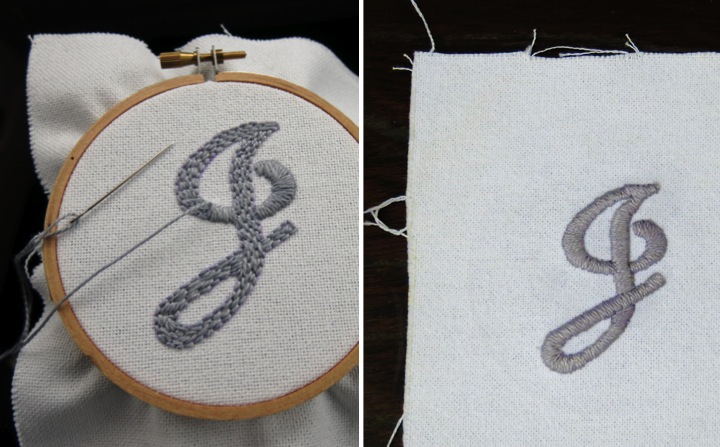
To start I cut a square of white embroidery linen a few inches larger than I wanted the final sachet to be, about 8" square. I then found a capital J in a script that I liked and traced it onto my linen with a disappearing ink fabric marker.

To be honest I just sized it to the way I wanted on my computer screen, held the linen over the screen and then traced it from there. It was not the most elegant solution but it was quick and easy since the screen acted as both my pattern and light box. After that I put the linen in a 4" embroidery hoop to hold the fabric taught while I embroidered the initial.
To give the initial a little dimension I decided I wanted to embroider it with a padded satin stitch, a technique where you fill in a shape with stitches before satin stitching over it in order to make the design raised.

I started by using some pearl cotton in a lavender-grey color to back stick around the outline that I had traced on the linen and then continued to fill in the design.
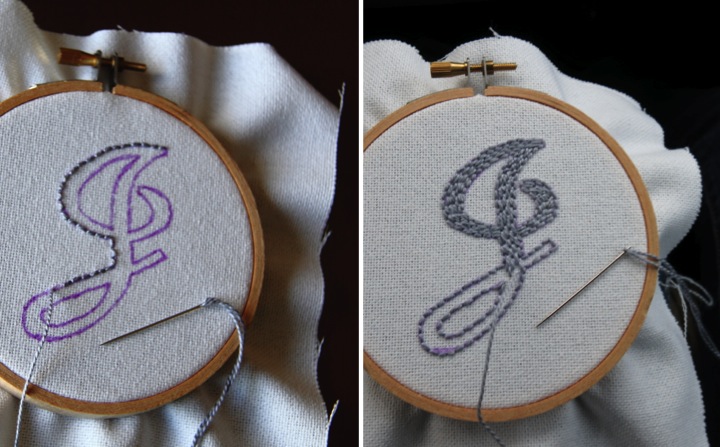
Once my initial was filled in I satin stitched over it, easing around the curves. With the embroidering complete I popped the linen out of the hoop, used a little water to remove any remaining trace of the marking ink, pressed the linen flat and trimmed it down to a 5" square centered on the initial.
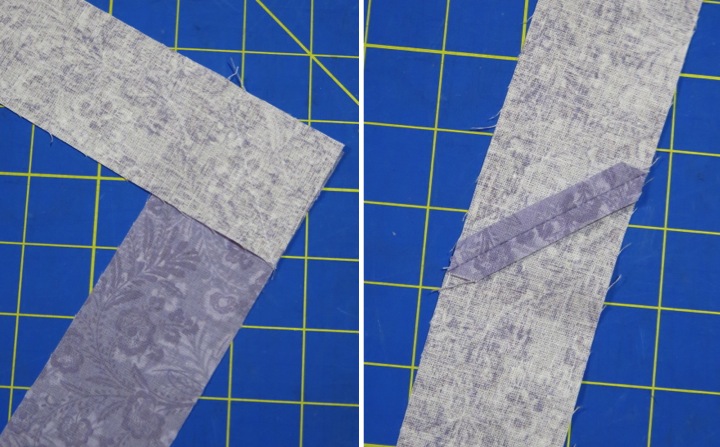
Next I made some binding for the sachet. My lavender-grey patterned fabric that I picked out was from a fat quarter so I needed to join some fabric to make the binding long enough. I cut two strips 22" wide and laid them right sides together perpendicular to each other. I then sewed on the diagonal to join them. After pressing the seam open and clipping the excess fabric I had a nice join. To complete the binding I folded it in half with the right side out and then pressed it flat.   
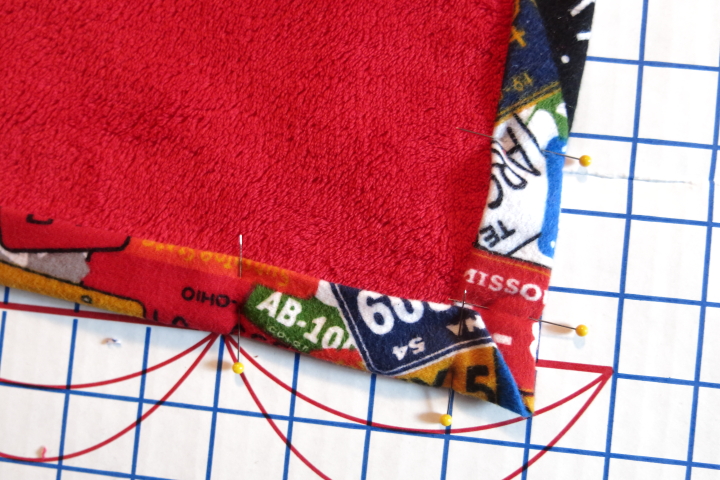
The next step was to attach the binding to the linen. I pinned it to the linen with the rough edge lined up to the outside edge of the linen. At the corners, I laid it across the top edge, folded the binding back on itself on an angle so it would line up with the side, and then folded it back down along the side edge. It is a little tough to describe in words, but I think it is clear in the pictures. I left several inches of excess tails along the bottom to sew together later. 
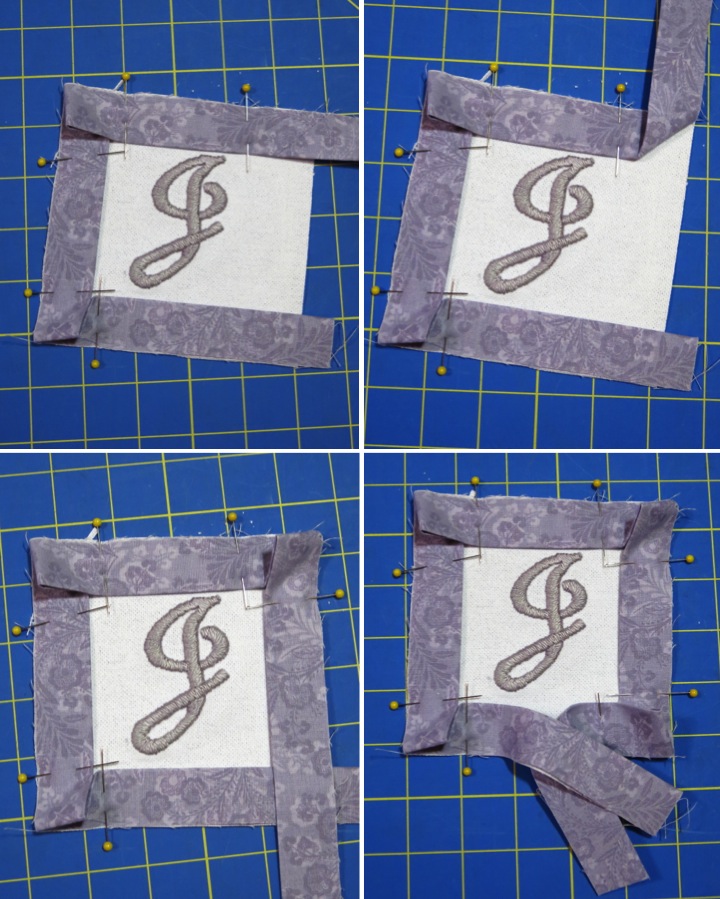
I sewed around the perimeter of the linen with a 1/4" seam. At the corners I did not sew to the edge and moved the flap of binding as I went so as to not trap the extra fabric in the corners. Also, I started and stopped fairly close (less than 1") to the corners on the bottom edge so that I had long enough tails to join my binding on the bottom.

To do the join, I opened up the binding and used my disappearing ink fabric marker to draw a line where the tails would meet. I pinned the tails together and then sewed along the line. I finger pressed the seam open and trimmed the tails. I then folded the binding back down and sewed the last section of binding to the linen. 
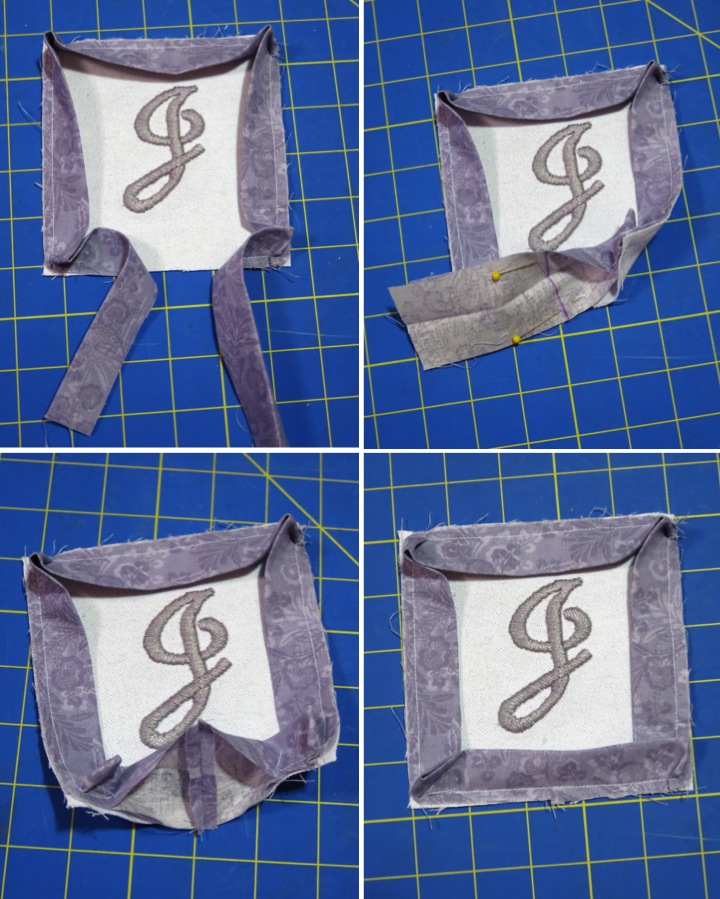
Next, I cut a 5" square out of my lavender-grey patterned fabric for the back. I placed my linen face down on my work surface, layered the back fabric on top, face up, and then pinned it all together. I then sewed around the edge, just inside the stitch line from the binding, leaving about a 2" opening at the bottom to add the lavender.
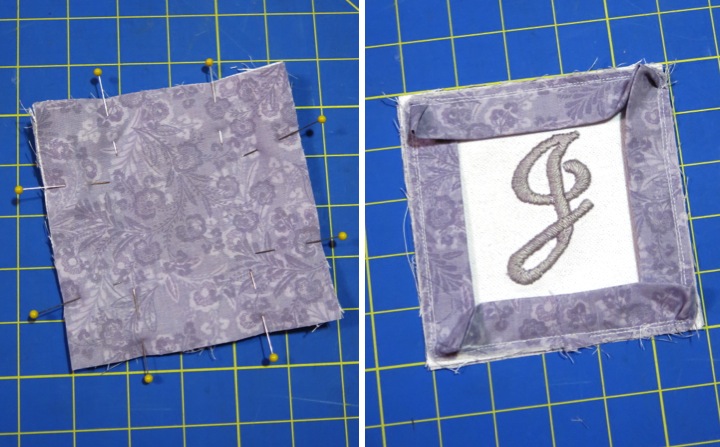
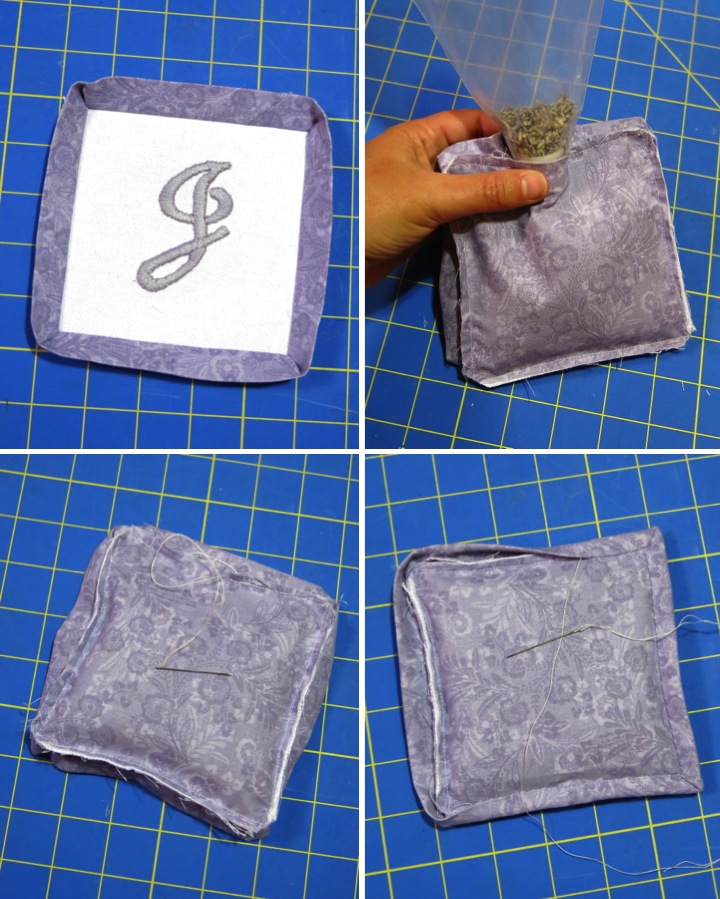
Since it would be hard to press once it was filled, I pressed the binding out flat now that my machine stitching was complete.

To fill the bag I used one of my disposable icing decorating bags to act as a funnel for the lavender, but you could use a regular funnel or make a cone from paper. Since I made the sachet rather large, I had to augment the lavender from my garden with some store bought in order to fill it. Once the sachet was full I hand stitched the opening shut. 

To complete the sachet I folded the binding over the rough edge and used a blind stitch to hand sew the edge of the binding to the back of the sachet. For the corners I tucked the extra fabric under for a nice clean look.
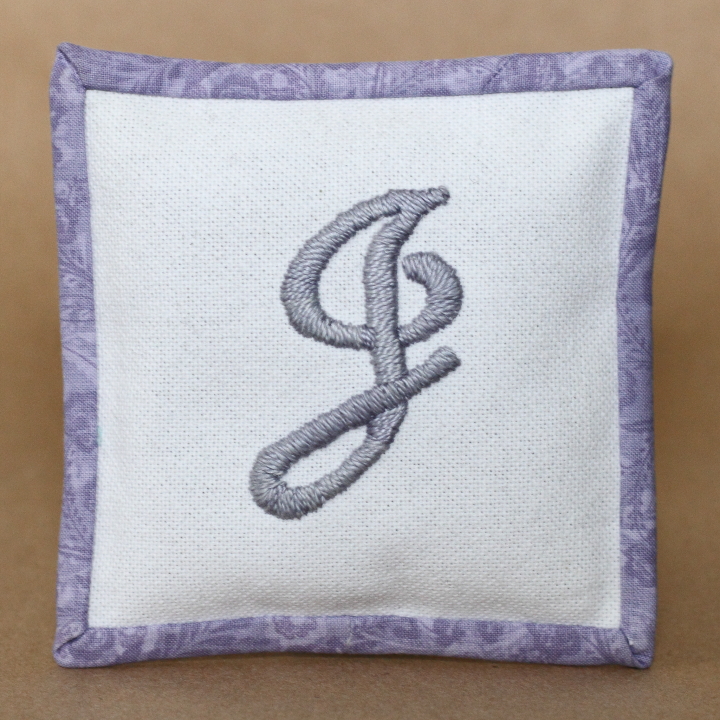
I am quite happy with how the sachet turned out. I think it looks so pretty and smells divine. Leading up to Christmas I had it on my dining room table and gave a light scent to the air. The best part was that Frank's mom loved it which is the most important thing of all.  
Thursday
Dec202012

Cake (and Cupcake) Decorating Kit

Frank's middle niece is ten years old and a pastry chef in the making. She loves to cook and especially loves to bake. She's always asked me a number of questions about cake decorating and even helped me decorate the Thanksgiving cake last year. I thought that for Christmas this year I would put together a beginning collection of her own cake (and cupcake) decorating supplies. 

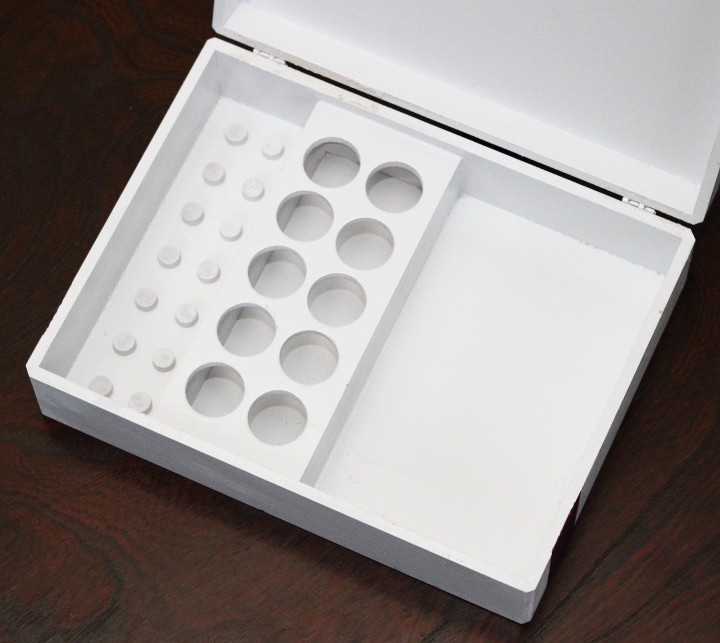
I didn't like any of the plastic decorating toolboxes that I saw available so I decided that I would make my own. Originally I planned on building my own box, but when I saw the perfect sized unfinished wooden box at Michael's I decided to buy it and just build the interior of the box to hold the supplies.

The first thing to build was a little caddy to hold the gel colors. I had a lot of frustration while building this but I'll outline what worked first and then explain what mistakes I learned along the way.

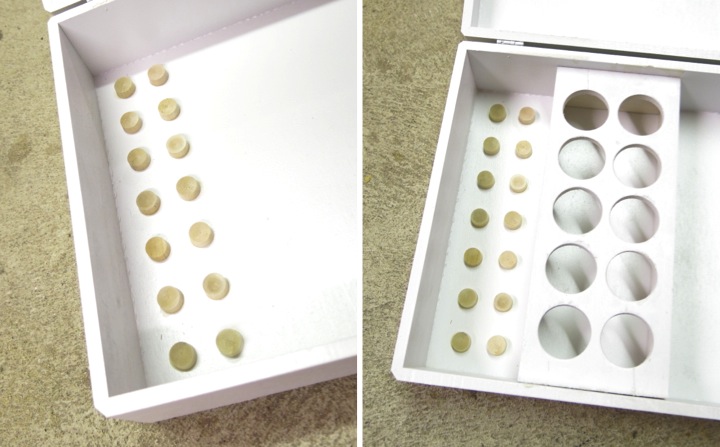
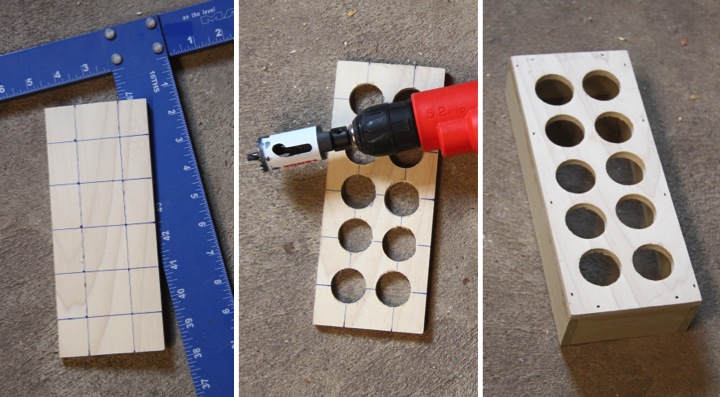
The box was 8-1/2" deep so I cut a piece of 1/4x4 craft board 8-1/2" long. I then marked center points for drilling my holes by drawing lines 1" from the outside edge, 1-1/4" from the top and bottom edge and then 1" spacing vertically between those lines. To make the holes I first pre-drilled a small hole at each line intersection and then used a 1-1/4" hole saw to drill the holes. I then finished up by building a box base with 1/4x2 craft board (2 pieces at 8-1/2" for the sides and 2 at 3" for the ends), attaching everything with wood glue and brad nails.

What I learned didn't work was mis-measuring the size of the gel color containers, using a 1-1/8" hole saw and then not realizing that the gel colors won't fit until you have already finished building the caddy. Also, trying to line up the hole saw without the pre-drilling the pilot hole led to a mess with the holes not lining up properly. All in all I had to build the little caddy three times before I got it right. That's what happens when you are tired and not thinking things through...

I filled the nail holes of the gel color caddy with wood filler and then sanded it and the box smooth. I wiped everything down with a tack cloth and then gave both pieces a coat of white spray paint with primer. I did this because I wasn't sure if I would be able to evenly coat the area under/inside the gel color caddy with paint after it was assembled.

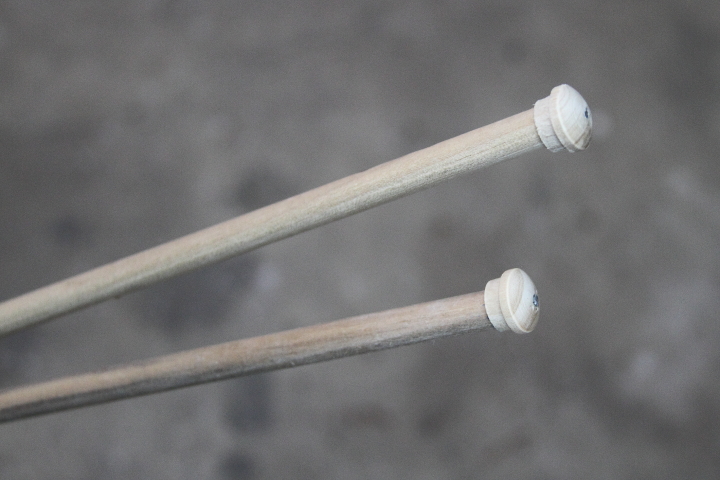
Once everything was dried I moved onto the area to store the decorating tips. At first I thought of cutting down a dowel but then had the idea to use 1/2" wooden hole plugs that I picked up at the hardware store. I lined them up with the wide side down in two rows along the left side of the box using some wood glue to attach them.

After the hole plugs were in place I put the gel color caddy inside the box, securing it with some wood glue and a few brad nails. I used some more wood filler to cover up the nail holes and fill in the seams where caddy met the box and then sanded everything smooth.

With the box built it was time to finish it. I used a few light coats of white spray paint of the inside and outside of the box.

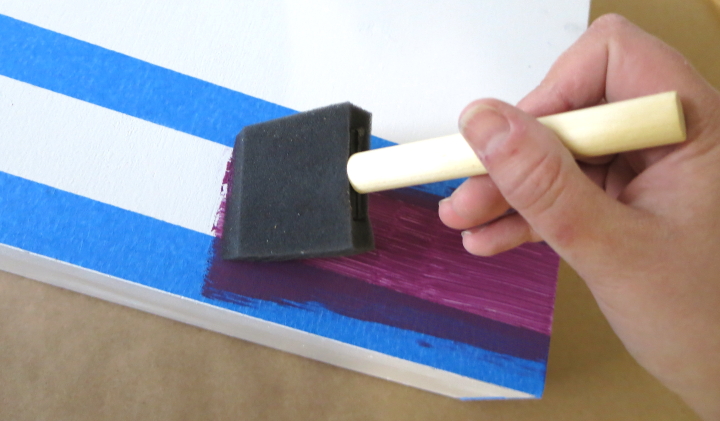
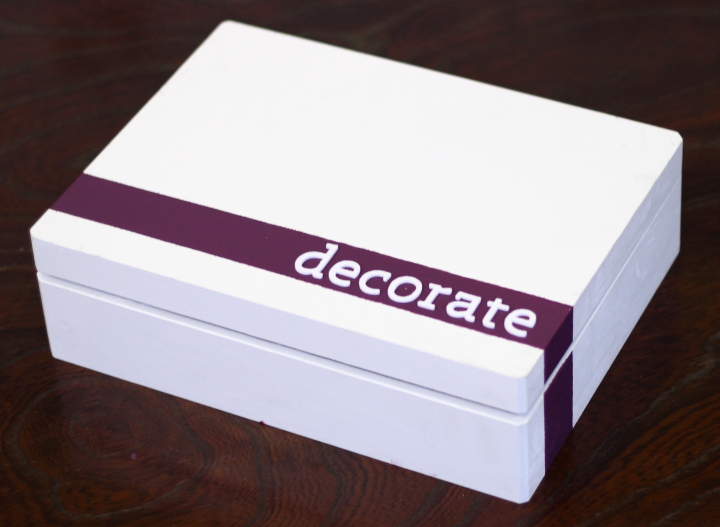
I decided to add a stripe across the top of the box in purple which is Frank's niece's favorite color. I marked off the space with some painter's tape and then used some purple acrylic craft paint and a foam brush to paint the line. Since the color was dark it took three thin coats to get nice coverage.

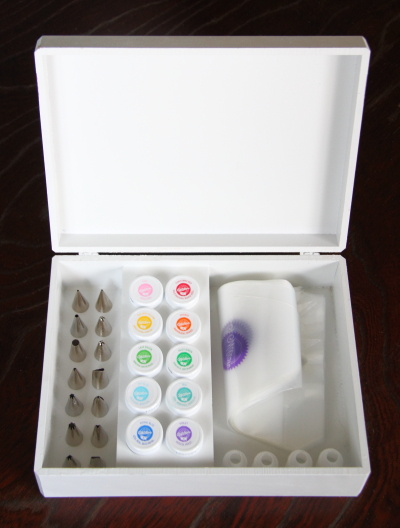
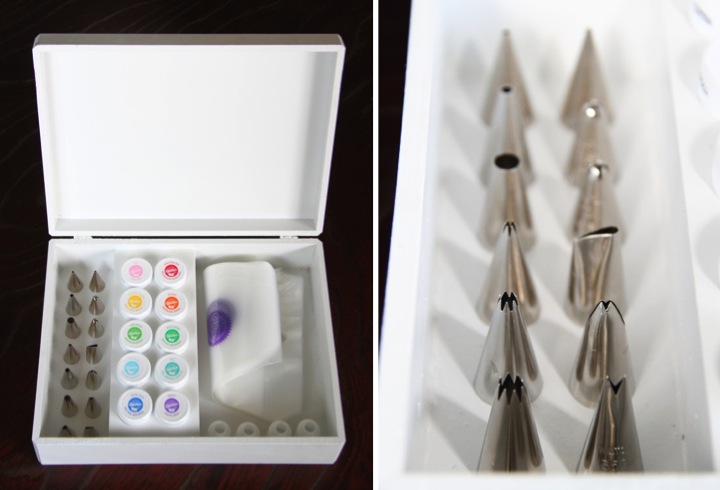
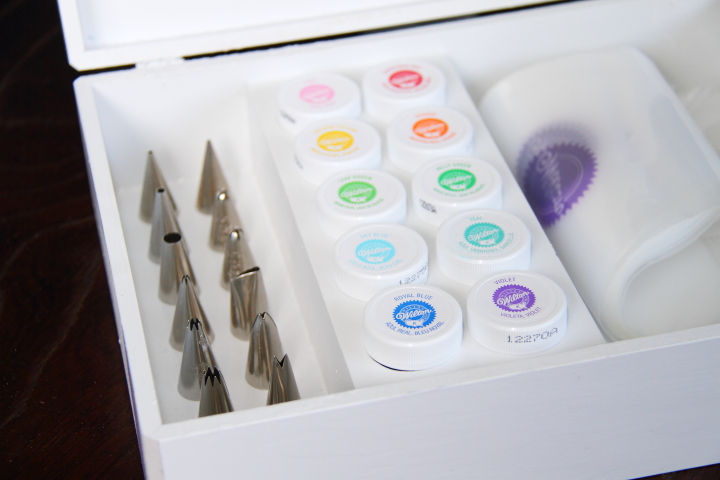
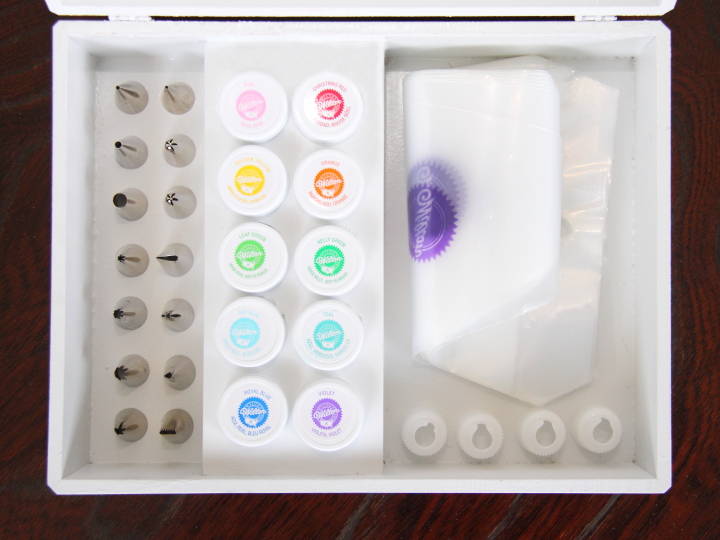
I used some foam stickers to add the word "decorate" to the top of the box and it was ready to fill up with cake decorating supplies. I picked out a variety of gel colors and a bunch of decorating tips to put in the box. On the right side I added some 12" disposable decorating bags and some couplers.

I am so excited to give this to Frank's niece (along with some pretty decorating books) and show her some techniques. I hope that she likes it!

Tuesday
Dec182012

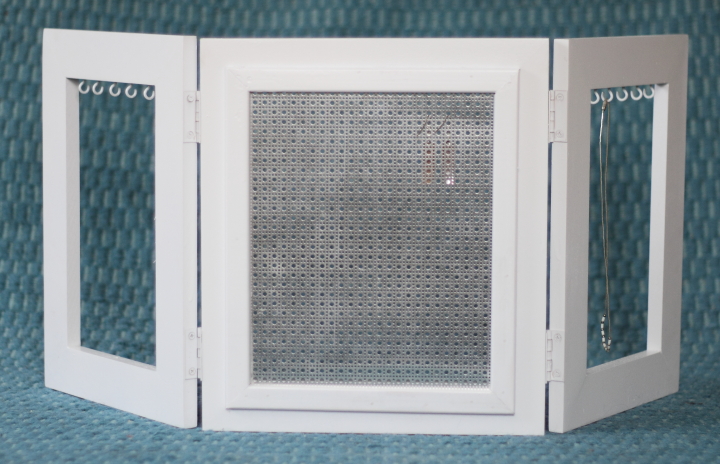
Triptych Jewelry Stand

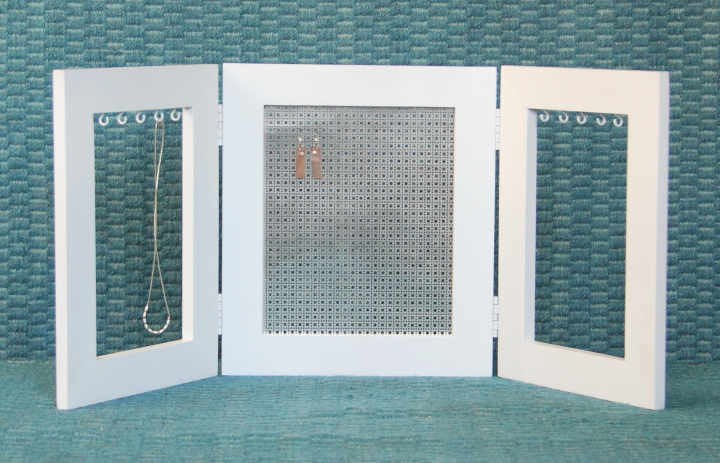
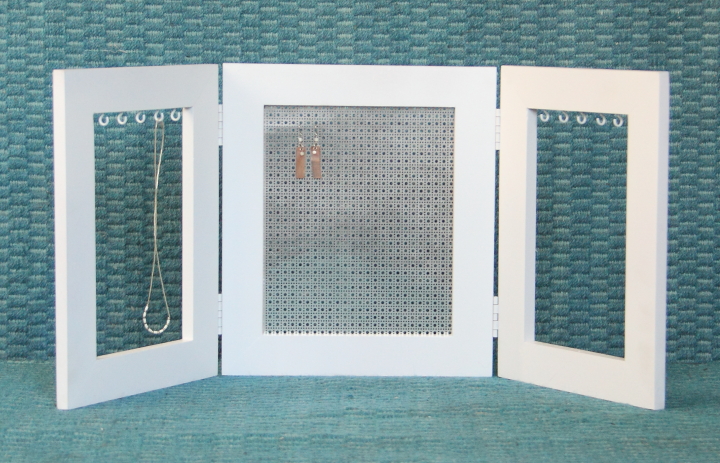
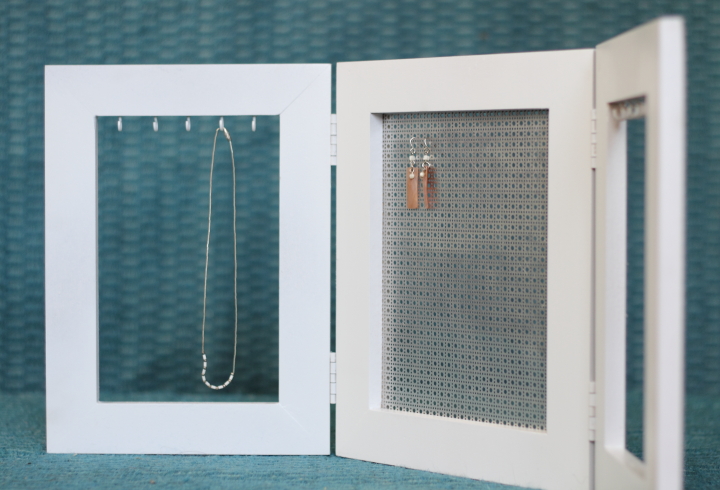
For Frank's oldest niece, who is 13, I decided to make a jewelry stand and small DIY earring kit (I'll share it in another post) for Christmas this year. I thought it would be fun to make a triptych with a place for earrings in the middle and necklaces on the sides, sketched out a basic design and got started building.

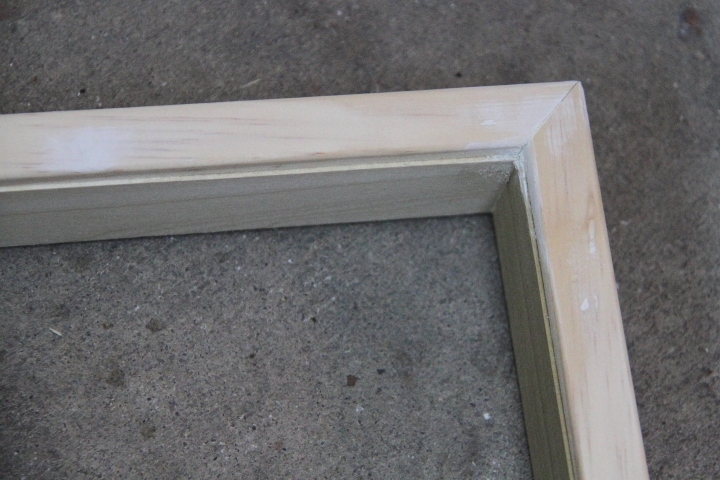
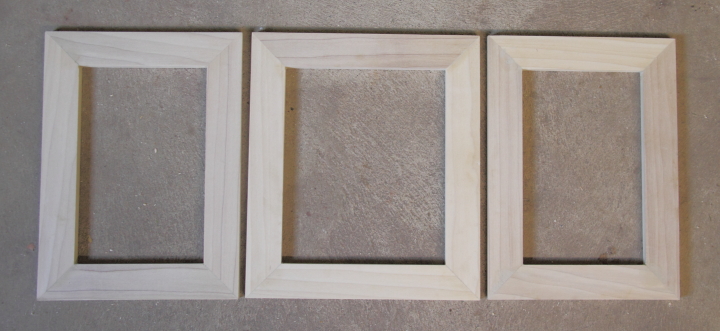
The first step was to make the frames. I bought some 1x2 pine boards and cut my pieces with a 45 degree mitre on the ends. I cut 6 pieces at 11.5" for the sides, 2 at 10" for the top and bottom of the middle frame and 4 at 8.5" for the top and bottom of the side frames. I did a dry fit to make sure that everything fit together nicely and then used glue and brad nails to assemble the frames.

I used wood putty to fill my holes from the nails, sanded down the frames, wiped them with a tack cloth and gave them a coat of primer.

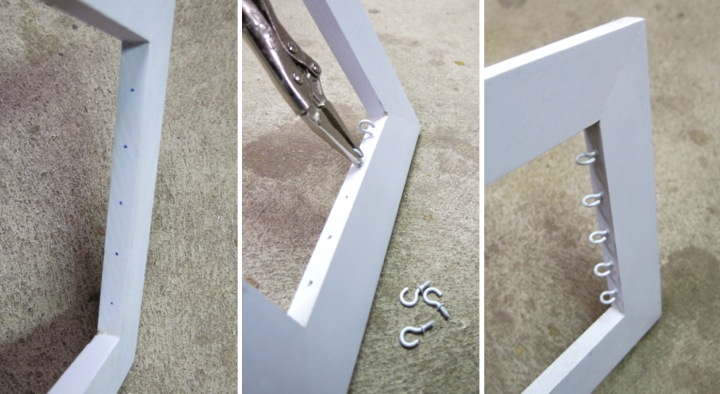
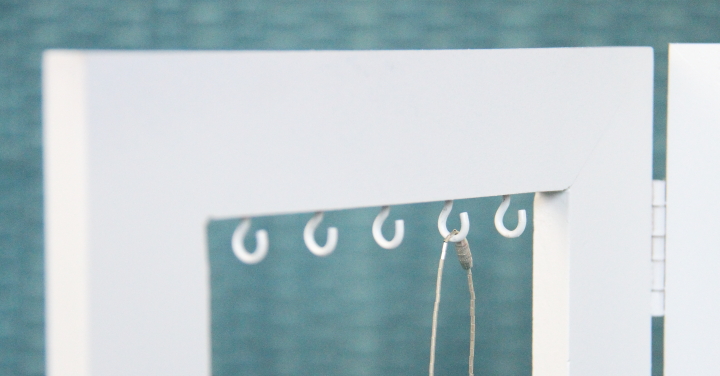
Next, I tackled adding the necklace hooks to the side frames. I chose tiny white 1/2" cup hooks since I thought they looked cute and dainty. I marked where I wanted my cup hooks to go with a 1" spacing between hooks and 3/4" from each edge and then used a 1/8" drill bit to predrill a hole in each spot. I started each hook with my fingers and then tightened them down using a small pair of vice grips.

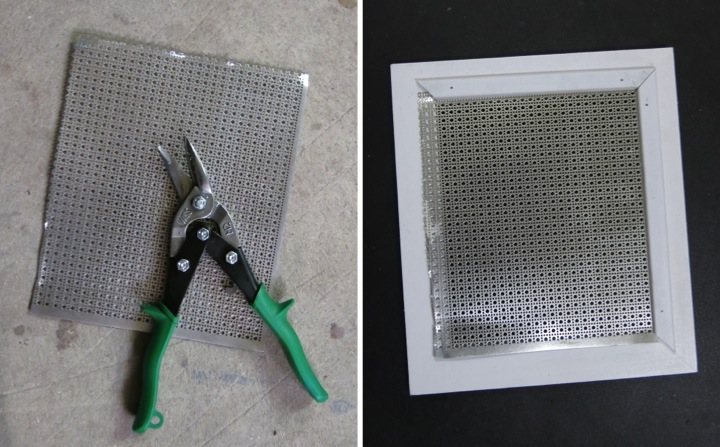
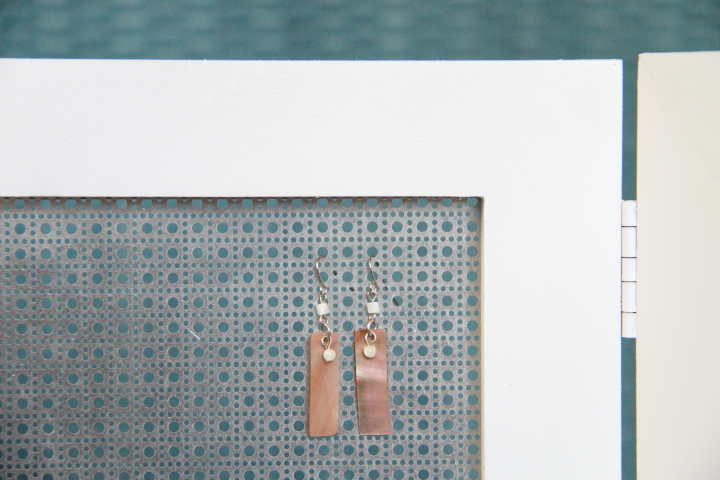
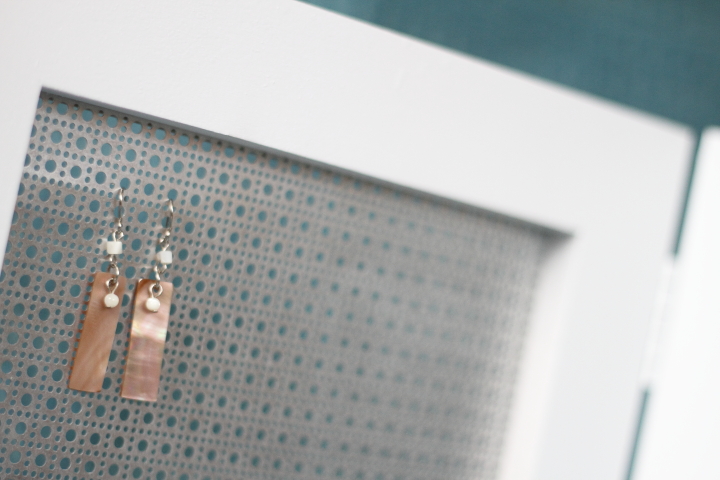
My next step was to add the metal mesh to the center frame for the earrings to hang from. I had some leftover perforated metal from making my bathroom vent cover which I thought would be perfect. I used my tin snips to cut a piece of the metal down to the right size and placed it on the back of the frame. I cut some pieces of screen molding to cover the rough edges and then used some wood glue and my brad nailer to attach it over the top of the perforated metal. I used wood filler to fill the nail holes and sanded it smooth.

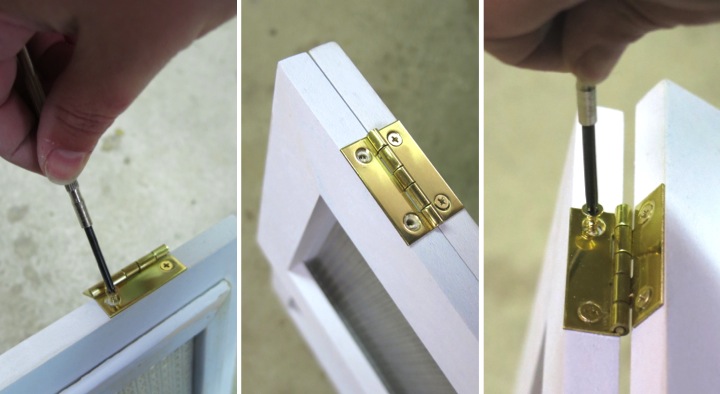
With each of the frames complete it was time to assemble everything. I used some small 1" hinges to join the frames together. I started by measuring up 1-1/2" from the ends on each side of the middle frame, positioning the hinges, and then marking where the screw would go. I then predrilled holes on the marked spots and used a precision screw driver to attach the screw hinges. Next, I lined up the side frames with the middle frame and repeated the process of marking where the hinge screws would go, predrilling holes and finally screwing in the hinge screws.

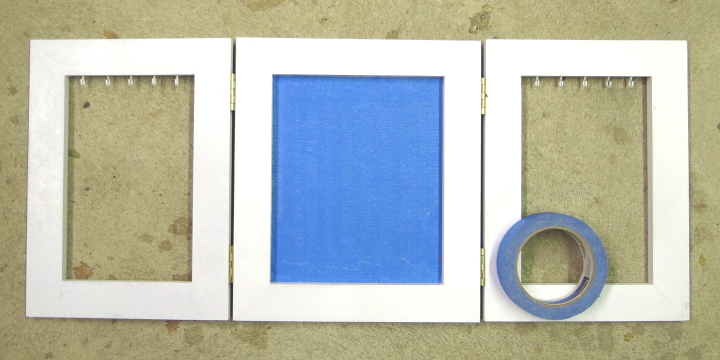
With my jewelry stand completed all that was left was a few coats of white spray paint to finish it off. I wanted to keep the perforated metal silver so I masked it off with painter's tape before spray painting.
I think that the jewelry stand turned out cute and I hope that Frank's niece likes it. I know I would have enjoyed it when I was 13!

How are your holiday presents coming along? Are you making anything fun?

Saturday
Dec152012

Terrasini Gift Scrapbook Album 

Earlier this year Frank and I went on vacation to Italy and stopped in the small Sicilian town of Terrasini, which is where Frank's paternal grandfather was born. Frank's great-grandfather and grandfather would head over to Detroit to work long hours in the auto industry and then head back to Sicily bringing money home. Frank's grandfather eventually decided to settle down in America and raise his family in Michigan.

We decided when we were planning our Italian trip that we wanted to see Terrasini. We took a boat from Naples to Palermo and then planned to take a day trip to Terrasini from there. We ran into a snag when we went to went to Palermo Centrale station and discovered that the TrenItalia website's timetable was not correct and the next train wasn't for a few hours. We had not come so far to be deterred and negotiated a good price with a taxi driver to take us to Terrasini. We had a wonderful day exploring the town and it was quite an experience to walk along the streets of his ancestors.

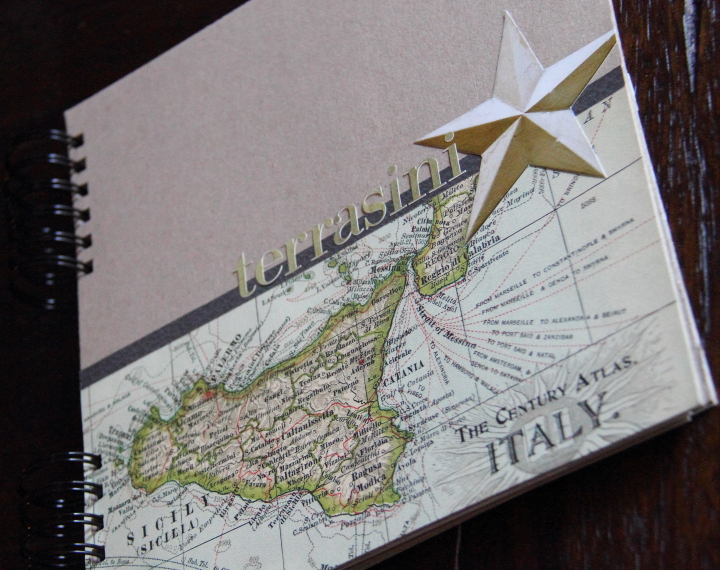
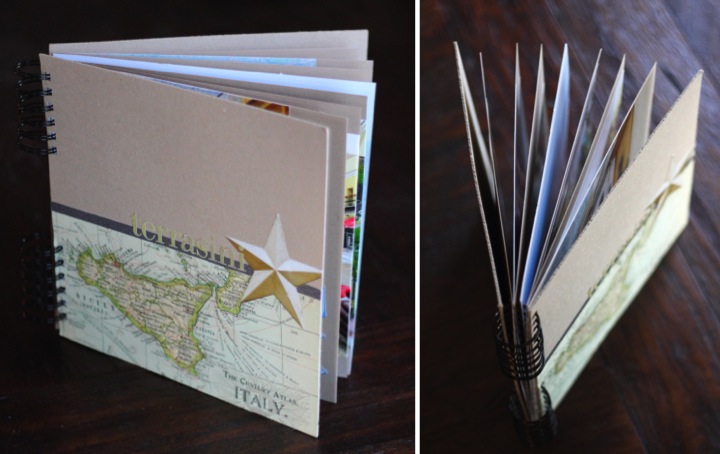
For Christmas this year I decided to make Frank's dad (who has never seen the town where his father was born) an album of the photos I took of Terrasini while we were there. I have a stash of albums and chose a 10" x 10" 7gypsies album with kraft cardstock pages and a kraft chipboard cover with wire binding.
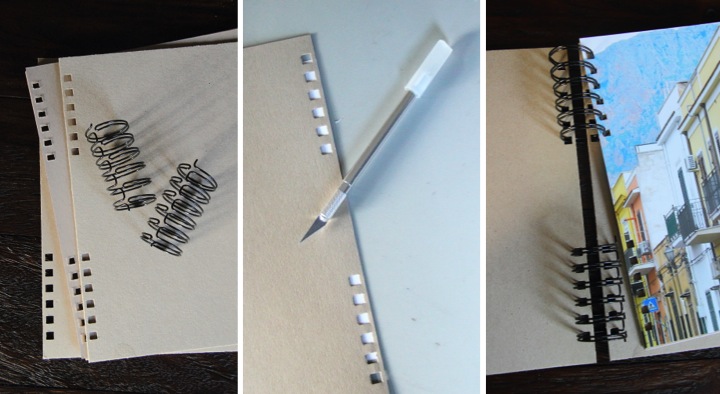
To start I carefully removed the covers and pages from the wire binding so that I could have my pictures extend to the edge of the inside of the pages. I wanted to keep things simple and just used some brown patterned paper and cream cardstock for matting pictures inside the album. After finishing each page I flipped it face down and used an X-acto knife to cut out where my design had covered the square holes for the wire binding. When I finished the everything I reassembled the album.
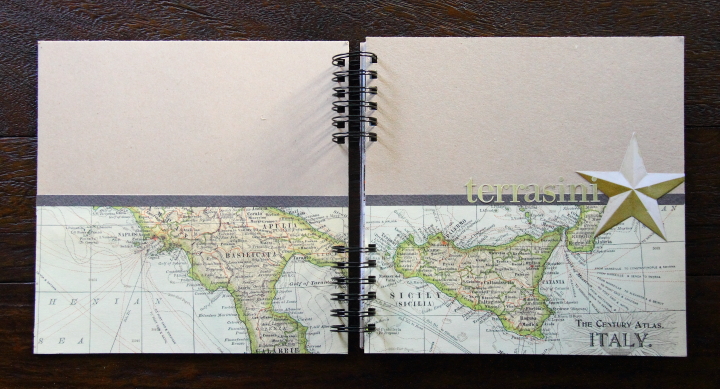
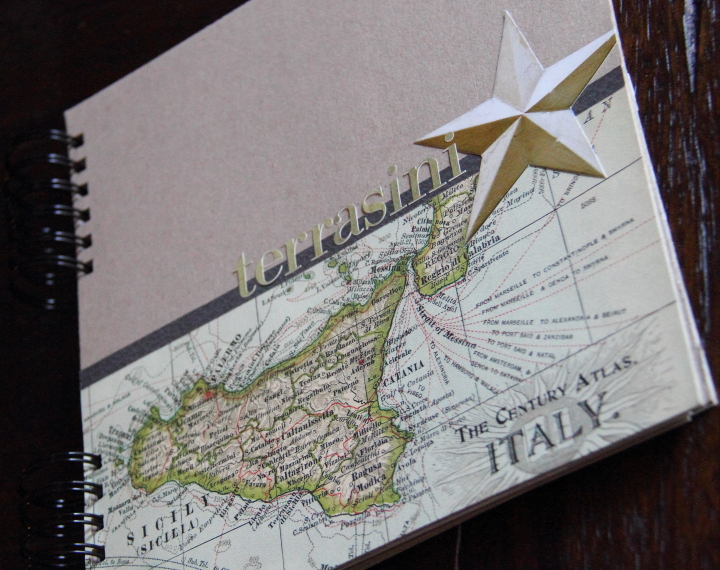
To decorate the cover I cut up a piece of wrapping paper with a vintage map of Italy on it. Since Terrasini is on Sicily I put that section on the front and used another section of the map for the back. I added a small strip of brown patterned paper that I used throughout the book to set off the map from the chipboard cover. As an accent I cut out a star from a photograph of a statue in Terrasini (more about the statue later) and finished by adding a title with letter stickers.

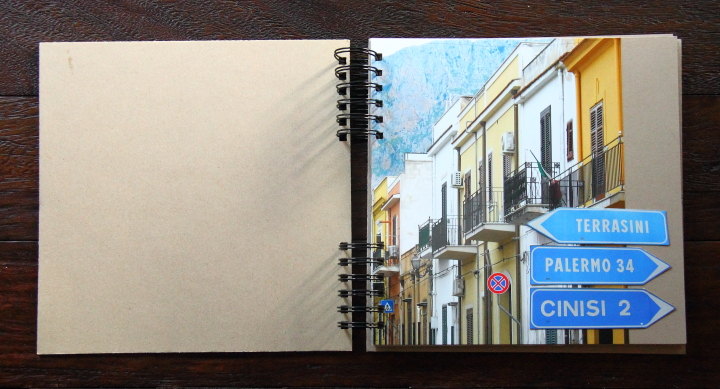
On the front page of the book I enlarged a photo of one of the streets in Terrasini with the mountains in the background. I also cut out the some sign markers from a picture I took on the outskirts of town and placed them in the right corner.

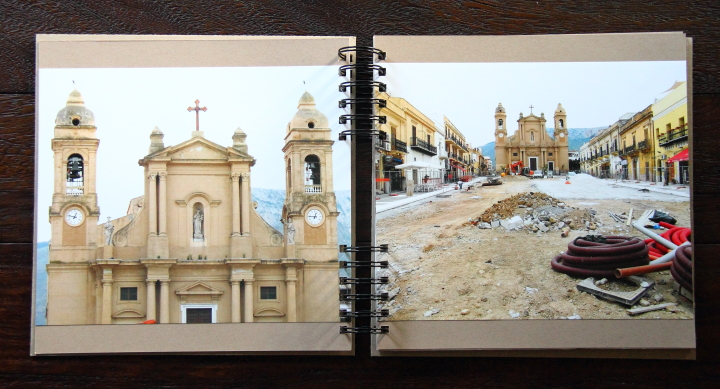
The first place that Frank and I stopped in Terrasini was Piazza Duomo, the central square in town flanked by shops and cafes with Cathedral of Santa Maria delle Grazie sitting at the end. The stonework of the piazza was being replaced while we were visiting and I am sure it will look quite lovely when completed.

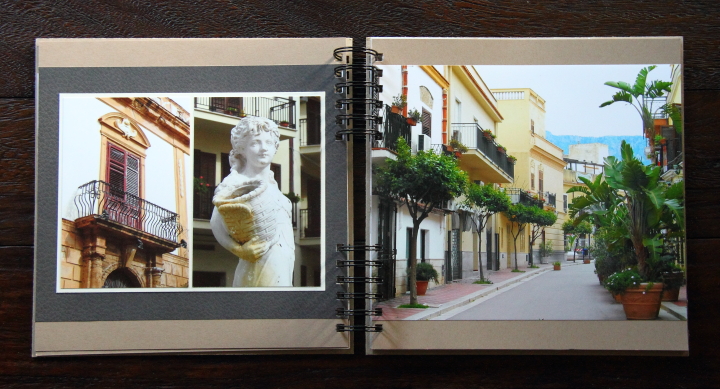
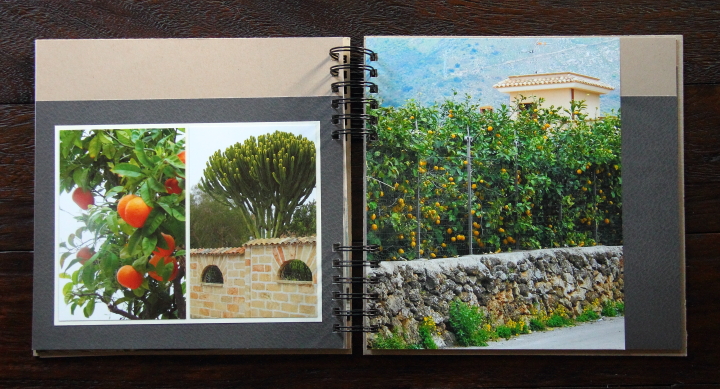
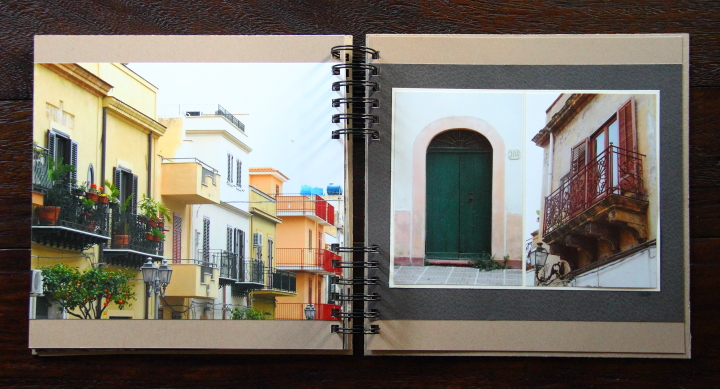
The streets and buildings in town were charming and I loved the small second floor balconies.

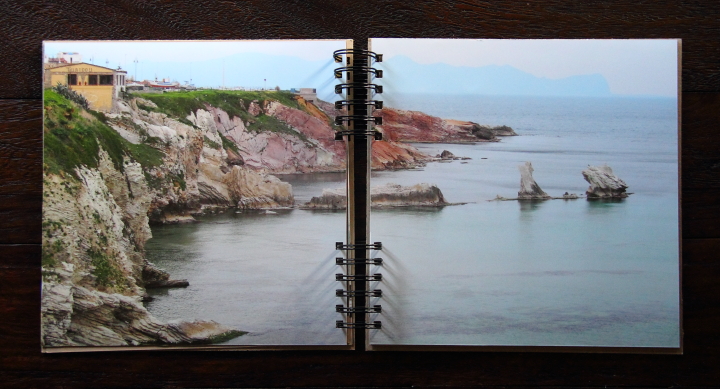
We walked out to the coast which was beautifully rocky and impressive, despite the cloudy day. For this section I enlarged a photo to 16" x 20" and trimmed it to span both pages of the spread.

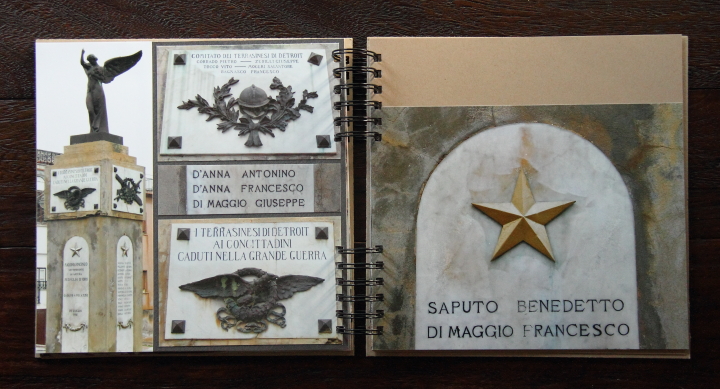
The coolest part of the visit was stumbling upon this statue which has Frank's great-grandfather's name on it. From what we can tell it was erected by citizens of Terrasini who had worked in Detroit (one of those people being Frank's great-grandfather) in honor of a fallen World War I soldier. It was pretty amazing to come halfway around the world and see this.

We next walked a little out of town to try and find a second cousin of Frank's knowing only a street name that he had lived on a few years back. We walked up and down the street looking at the names on the gates but didn't find the name, unfortunately. It was a lovely area though with an abundance of orange trees and beautiful gardens.

We walked back through town with me taking more pictures along the way, of course.

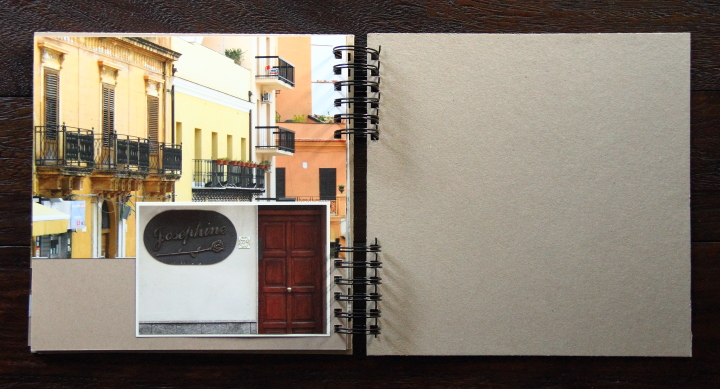
On the final page I put an enlarged photo of some of the shops along Piazza Duomo along with a sign that we saw with Frank's grandmother's first name.

I am happy with the way the album turned out and I hope that Frank's dad enjoys it.

Have you made any scrapbook albums for gifts this holiday season?

1/3/2013 Update: Courtney requested in the comments that I provide an update on Frank's dad's reaction after I gave it to him. He really liked it and I saw him quietly looking through the album several times over the course of the evening as well as pointing out the family name on the statue to each of Frank's nieces.  It made all the effort worthwhile to see him enjoy the album so much. 

Friday
Dec142012

Small Gift Crate

With Christmas fast approaching I am busy finishing making my holiday gifts.  As a personal touch for some of the purchased items I decided to make little crates to hold the gifts. I used 1/4" poplar craft boards and made them in about half an hour. My dimensions are to fit these spices that I bought for gifts in the Caribbean when I was visiting my sister last month, but the design is so simple that you can easily modify it to fit whatever gift you are giving. 
Cut List:
1 - 1/4x4 @ 7-1/2" for bottom
2 - 1/4x4 @ 2-3/4" for ends 
4 - 1/4x1/2 @ 7-1/2" for side slats 
6 - 1/4x1/4 @ 7-1/2" for side slats  

To start use wood glue to attach a 1/4 x 1/4 slat to each edge of the bottom piece. Next, use more glue to add both ends to the crate. 
Attach a 1/4 x 1/2 slat on each side, aligning them with the top of the ends. Fill in bothe sides with the remaining slats, putting another 1/4 x 1/2 slat centered in the middle with two more 1/4 x 1/4 slats in between.

In addition to the wood glue I used my brad nailer to hold each of the slats and the ends together and make it a little sturdier. If you don't do that be sure to clamp the crate until the the glue has fully dried. 

To finish, I filled the holes with wood putty, sanded everything smooth and gave the crates a coat of navy blue spray paint.

I think the crates turned out great and can be used by the recipient for small storage later. Quick, easy and cute!

Wednesday
Aug152012

Simple Flower Arrangement With Washi Tape Vase 

Yesterday I made a simple flower arrangement for someone special who is going through a tough time right now. I went to the grocery store and picked out a bunch of colorful alstroemeria and a bunch of gerbera daisies and set to work.

I started by gussying up a plain glass vase to match the flowers that I had purchased. Since the flowers were fuchsia and deep pink I picked out a few different washi tapes from my craft stash in those hues.

Starting from the bottom, I wrapped one of the washi tapes around the vase, careful to keep it straight and even. It took a little bit of effort to make sure that by the time I wrapped it around the ends would meet up.

Once the first line of tape was level it was easy to wrap the remaining tapes, using the tape below as a guideline. I left about 1/4" between each line of tape so that a bit of the stems could peek through. 

With the vase completed I started arranging the flowers. I bunched up the gerbera daisies in the center and then started adding the alstroemeria around the outside edges. I adjusted the stems until I had them the way I wanted then secured them with a rubber band and trimmed them to fit in the vase.

I think that the flower arrangement turned out fun and bright and I hope it brings some cheer to the recipient.

Sunday
Aug052012

Sharpie Train Coffee Cup For Grandpa's Birthday

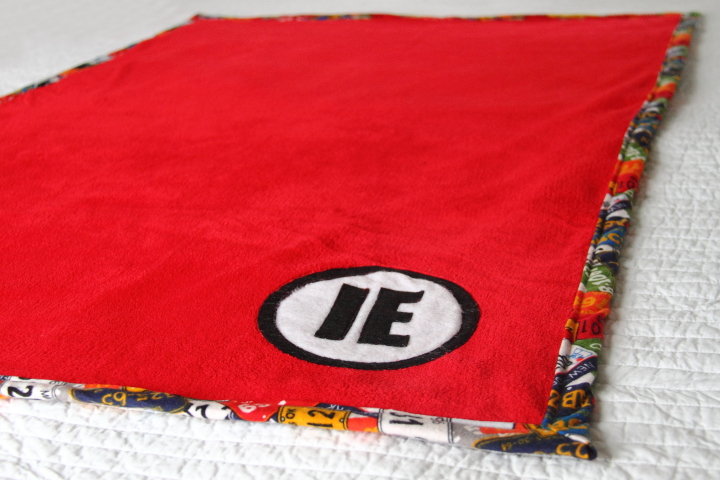
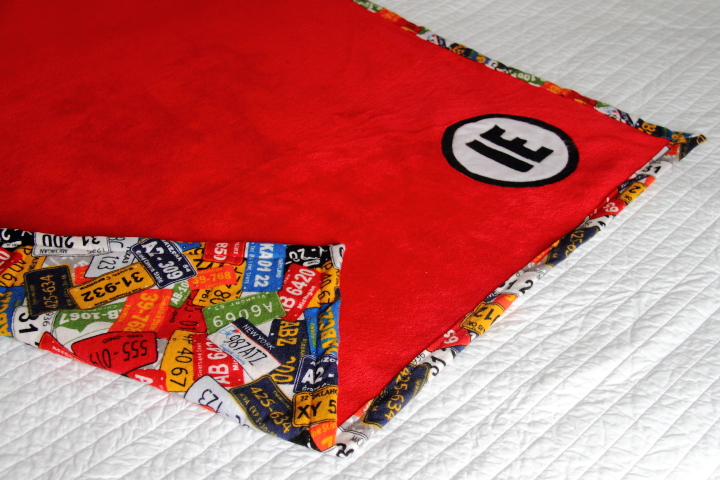
My grandpa loves trains so I usually make something train related (like this Soo Line fleece blanket) for him when I give him gifts. 

This year as I was trying to figure out what to make him for his birthday I was inspired by all of the links on the internet (like here and here) about customizing ceramics by drawing on them with a black Sharpie marker and then baking them in the oven to set the design. I thought this would be a perfect technique to make a train coffee cup for my grandpa.

I brainstormed about what design I should make and decided that a cartoon aerial view of train tracks would be cute. I started by drawing a set of thin parallel lines for the tracks on the mug. At two spots I stopped and drew a series of rectangles to represent the top view of the train. I went back with a thicker black Sharpie and drew in the railroad ties over the tracks. I wanted a little color so I filled in the train cars with red, blue, green and aqua Sharpies (with the caboose being red of course!). I also added some puffy smoke coming from the train engine.

The cup still looked a little plain to me so I drew in stripes along the bottom part of the cup with the various colored Sharpies. I made a random pattern and alternated thin and thick lines.

Once I was happy with the design I popped the mug in the oven at 350° F for thirty minutes to set the design and then let it cool. The cup seems to hold up well to hand washing, but I've read that the dishwasher can cause the design to fade.

Since I free handed everything there is an inconsistent wave to some of my lines, but I like the look because it shows that it was a handmade gift. Hopefully Grandpa likes it! 

Have you tried customizing anything with a Sharpie? What did you make?

Tuesday
Jul032012

Making A Child's Apron from a Tea Towel

A special little lady that I know is turning ten so I decided to make her an apron for her birthday since she loves to cook and help out her mom in the kitchen.

As I was trying to figure out what fabric to use I happened to see this cute tea towel and I thought it would be perfect to turn into the apron. The tea towel is made from durable twill and I love the graphic silverware motif along the bottom.

I started by measuring 6" in from the top of the towel and 10" down on each side and used a disappearing ink marker to draw a line between the marks. I drew a parallel line 1" (my ribbon width plus a little extra for my seam) from the original line and then used my rotary trimmer to cut off the excess 1/2" past the second line.

I placed the tea towel right side down on my ironing board and then ironed over the edge along the outermost line. I then folded over the edge again, ironing along the inner line. I pinned it down and then sewed 7/8" of an inch from the folded edge which gave me a channel for my ribbon. I then repeated the same step for the other side. When I was finished I used some water to rinse away the marking guidelines that I had made.

I cut 7' of ribbon and threaded it from the bottom of one channel up to the top and then from the top of the other channel back down. This gave me a loop to go over the neck and then ties for around the back. I trimmed the ribbon on an angle and then used a dab of fray check to make sure it wouldn't unravel.

The measurements that I used worked for the dimensions of my tea towel and the size of the little lady I am making this for. If you are trying this, you may need to adjust according to your needs to make things proportional. Also, my ribbon is grosgrain and seems to stay in place, but if you use something more satiny that is slippery, you may want to add a stitch or two to keep the ribbon in place or knot the ends of ribbon so it doesn't slide out.

The project was really easy to make and I think it turned out cute. I hope that the birthday girl likes it!

Sunday
Jun172012

How to Wrap Gifts Like A Japanese Department Store

One of the things that I always thought was cool while living in Japan was the method that the department stores would use to wrap gifts. They wrap the gift with the paper on an angle, tucking the excess paper in as they go and the final result requires only a single piece of tape at the end. It always looks quite elegant and I would watch amazed as the department store clerks would beautifully wrap up something I bought so quickly and efficiently.

With one of my friends moving to Chicago I bought her a little book about the town as a going away gift and thought it would be fun to wrap in a Chicago map. I've been meaning to try to wrap something Japanese Department Store style and this seemed like a good opportunity.

I had seen it done a ton of times so I thought it wouldn't be hard but it is definitely a little more difficult than it looks. I tried it out with a scrap piece of paper before I wrapped it for real with the map and I am glad that I did. Getting the right angle and making sure the paper is big enough to cover your gift, but not so big that you have too much excess paper to tuck in is a little tricky. I think with a little practice it would be fairly simple to get the hang of though.

To wrap the gift place it in the bottom right corner of your paper at an angle so that you can fold a small amount of the corner of the paper over the bottom of the gift. Next, fold the paper over the right side of the gift, tucking in the excess paper at the corner so the paper lays flat.

Once you have the bottom and right side folded over, you flip the gift over itself on the table, tucking in excess paper on the right as you go. Now the gift is mostly covered with paper flaps still remaining on the left and top. Fold the left side over the gift, tucking in the excess paper and the finish by folding down the top over the gift. The wrapping paper can now be secured with a single piece of tape on the top flap. I finished my gift off by adding a handmade Bon Voyage card and some baker's twine with a bow.

I am happy at how my first try at Japanese Department Store gift wrapping came out and I'll have to try it again. If you are curious how the experts do it, here is a video of a lady slowly explaining how to wrap a gift (it's in Japanese but you can see how it is done) and here is a video of an Isetan Department Store Clerk in action wrapping a gift. Pretty neat, don't you think?